Carbon180 Lays Out a Roadmap to Scale Carbon Removal on US Farmland
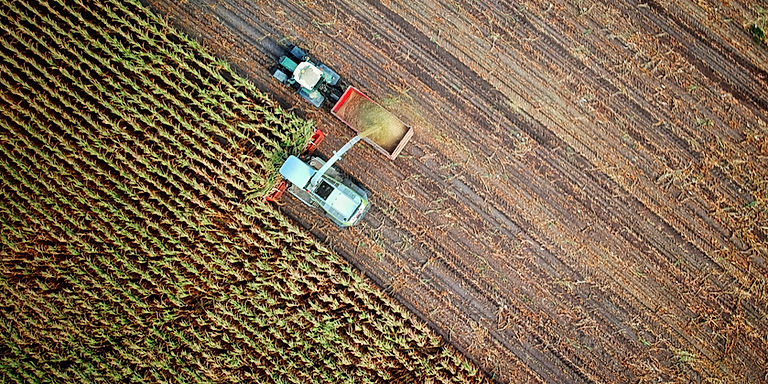

Carbon180's Roadmap to Scale Carbon Removal on Farmland
At a glance:
🌱 Carbon180 released "Restoring Carbon for Healthy Agricultural Lands," a policy roadmap for scaling carbon dioxide removal (CDR) on US farmland
🎯 It sets a target of removing 30 million tonnes of CO2 per year by 2030
The roadmap is producer-centered, built on feedback from farmers, scientists and technical assistance providers
Farmland is one of the most promising and most overlooked places to store carbon. On 21 October 2026, the US think tank Carbon180 put that idea at the centre of a new policy roadmap, "Restoring Carbon for Healthy Agricultural Lands," setting out how the federal government could scale carbon dioxide removal on agricultural land. As the organisation frames it, working with farmland "can scale some of our most time-tested carbon storage practices right now."
The roadmap is deliberately producer-centered. It draws on feedback from land stewards, scientists and technical assistance providers who contributed to Carbon180's earlier "Living Ground" report, published in September 2026, and it organises its recommendations across areas including infrastructure and market access, land access and tenure, technical assistance and local capacity building, incentives and risk management, and monitoring, research and development.
What the roadmap proposes
Several concrete ideas stand out. A conservation pilot procurement programme would create demand for crops grown with carbon-sequestering practices. A workforce development programme would pair new and aspiring farmers with mentor farmers who already use regenerative practices. The roadmap also calls for free nationwide soil health testing and interpretation for interested farmers and ranchers, and for longer, multi-year federal conservation contracts that reward producers for maintaining practices long enough to match the pace at which soil carbon actually accumulates.
At the technical core sits Carbon180's signature proposal on soil carbon MMRV, legislation that would standardise how soil CO2 is measured, reported and verified, and create a national soil inventory and analysis network. Reliable measurement is what turns good practice into credible, bankable climate outcomes, and it is often the missing piece.
Why it matters
The headline number, 30 million tonnes of CO2 a year by 2030, is ambitious, and the roadmap is clear that reaching it requires a new vision for both agriculture and carbon removal. The emphasis on producers, measurement and long-term support is a useful reference point well beyond the US, at a time when Europe is building its own frameworks for carbon farming, measurement and nature credits.
Carbon farming is one of the verticals Agriventures works in, and the lessons here are familiar: durable results depend on trusted measurement, patient support for farmers, and incentives that match the slow rhythm of soil. Roadmaps like this one are a reminder that the climate value of farmland is real, and that unlocking it is as much a policy and trust challenge as a technical one.
Check out our guides for funding opportunities
https://projects.agriventures.co/resources
Agriventures Connect 3.0 is coming on 20th of April 2027 in Sofia, Bulgaria
https://connect.agriventures.co/
The role of Agriventures in supporting agrifood innovation
As the agritech startup ecosystem grows across Europe, initiatives such as Agriventures are helping connect entrepreneurs, researchers, investors, and policymakers working in agriculture and food innovation.
Agriventures focuses on supporting agrifood startups, biotechnology innovation, and access to European funding for agriculture, while also helping entrepreneurs navigate the complex landscape of startup financing, venture capital, and research commercialization.
By strengthening connections between startups, research institutions, investors, and farmers, Agriventures contributes to building a stronger agricultural innovation ecosystem that can accelerate the transition toward sustainable agriculture and resilient food systems.
Through knowledge sharing, events, and ecosystem building, Agriventures helps ensure that promising agritech innovations can scale and reach farmers, food producers, and global markets.
Tags
Related Articles
Continue reading our latest insights and updates from the AgriVentures ecosystem.

A New International Research Community on Agrifood Law and Food Systems Launches in Brussels
The International Joint Research Group on Agrifood Law and Food Systems was launched in Brussels on 15 October 2026. Agriventures took part in the founding discussions. The International Joint Research Group on Agrifood Law and Food Systems (IJRG-ALFS) was officially launched on 15 October 2026 at Vrije Universiteit Brussel | It took place during the 5th Food Law, Policy & Diplomacy Conference, opened by an FAO keynote on the right to food | Agriventures contributed to the discussions, with...

🌱 SYSARM Project: Join Our Regional Learning Alliances!
The SYSARM (Systems Thinking for Agricultural Risk Management) project is entering an important phase: the development of Regional Learning Alliances (RLAs) that bring together key stakeholders to improve agricultural risk management through systems thinking, collaboration, and knowledge exchange. 🤝 Why join a SYSARM Regional Learning Alliance? By participating, your organisation can: ✅ Share your expertise and needs — contribute your practical experience and help identify the key...

World Food Day 2026: 50 Funding Opportunities for Food Security and Sustainable Food Systems
To mark World Food Day, Agriventures has published a free guide to 50 funding calls, prizes and programmes for food security and sustainable food systems, each with a direct link to the official call page. World Food Day falls on 16 October, the date FAO was founded in 1945. This year's message, “Innovate today. Nourish tomorrow.”, puts innovation at the centre: not only data, AI and robots, but also traditional knowledge, existing solutions used in new ways, and better methods to produce...

Biotechnology, Agri-Inputs and Biosecurity: Why the Future of Farming Needs a Wider Conversation in Sofia
Agriculture is undergoing a quiet transformation. Genomic tools, precision biological solutions, and new generations of crop protection and plant nutrition products are changing what is possible in the field and along the whole food chain. At the same time, the same advances raise questions that the sector is only beginning to ask. Who controls the genetic resources and seeds we depend on? How do we manage biosecurity when biological agents and genomic technologies can be used for more than...

Where Agrifood Biotech and Research Funding Is Actually Going in 2026
Basic research doesn't fund itself, and in agrifood, the gap between a promising lab result and a fundable project often comes down to knowing which of a dozen overlapping EU programmes to approach first. Food safety science, biotech platforms, and multi-country research consortia each follow their own funding logic, and 2026 has brought fresh calls across all three. Two Live Examples Worth Studying Safe-Agri, one of AgriVentures' active projects, is reinforcing the security assessment...

VerAgro launches a free self-assessment to help farms measure - and improve - their sustainability
"How sustainable is your farm?" It's a question most producers can answer instinctively, but rarely with hard numbers. A new Bulgarian startup wants to change that. VerAgro, a Bulgaria-based agtech startup, has launched a free online self-assessment that gives farms and processors a clear, structured picture of where they stand on sustainability — and what to do next. A 20-minute check-up for your farm The tool works like a health check-up for your operation. Farmers and processors answer 57...
Never Miss an Update
Join our community to receive the latest insights, funding opportunities, and industry news from AgriVentures.