Climate Action That Works for You: Europe Reaffirms Its Green Ambition

On 30 September 2025, the Directorate-General for Climate Action (DG CLIMA) of the European Commission held its annual high-level conference titled “Climate Action that Works for You – An Agenda for Competitiveness, Prosperity and Resilience” at the Charlemagne building in Brussels.
The event brought together European policymakers, entrepreneurs, investors, and community leaders to assess progress toward the EU’s climate goals ten years after the Paris Agreement and six years into the European Green Deal. It served as both a reflection on achievements and a roadmap for the next phase of Europe’s transition to a climate-neutral economy.
Among the invited speakers was Mariya Hristova, founder of Agriventures, who represented Bulgaria and the agrifood innovation community during the session “Engaging Communities in the Clean Transition: Local and Regional Impact Stories.”
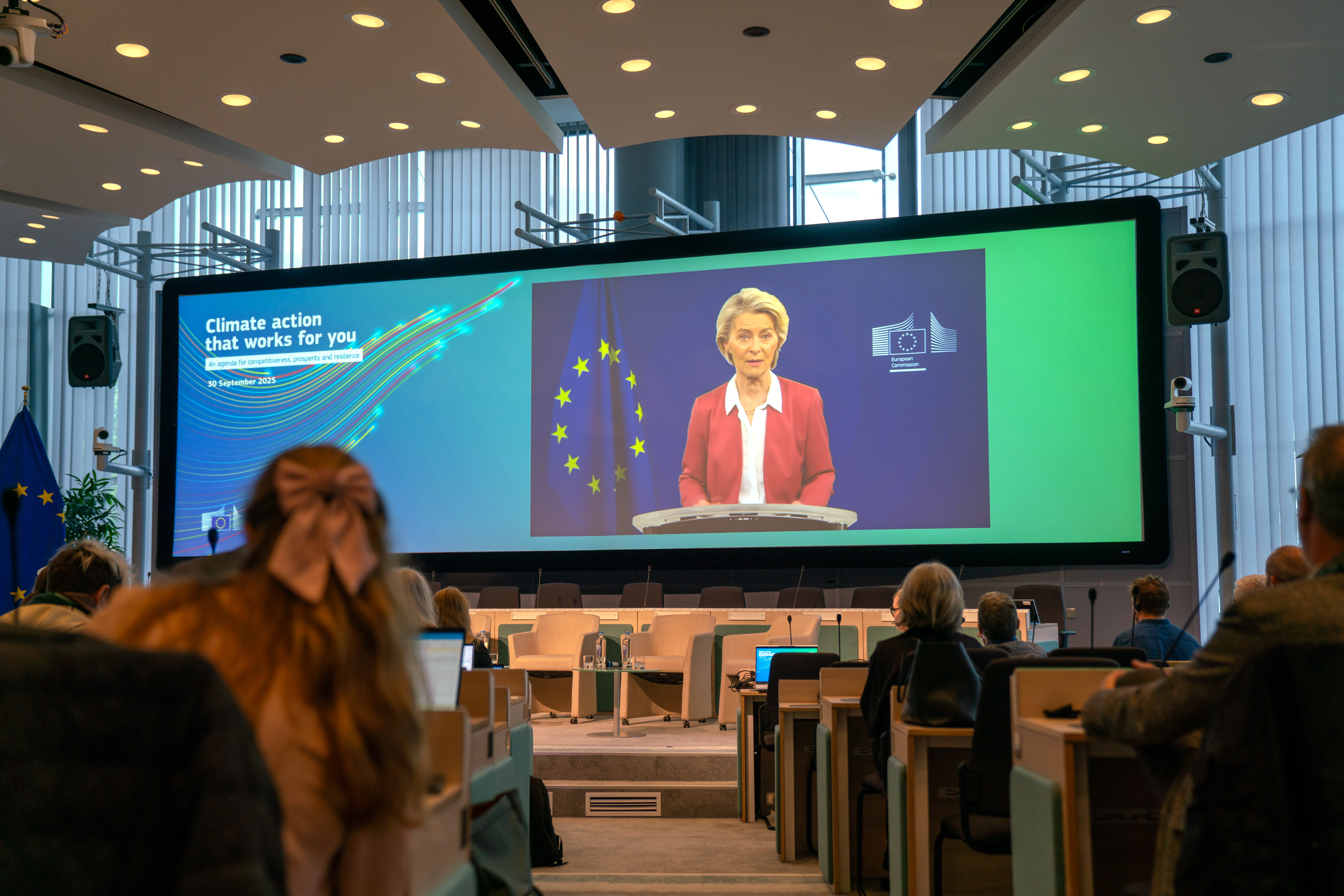
Setting the Vision: From Goals to Gains
The conference opened with a high-level session moderated by Anna-Kaisa Itkonen, Spokesperson for Climate Action and Energy at the European Commission.A video message from Ursula von der Leyen, President of the European Commission, reaffirmed Europe’s steadfast commitment to achieving climate neutrality by 2050.Kurt Vandenberghe, Director-General for Climate Action, emphasized that the green transition has become central to Europe’s economic resilience.François Gemenne, Director of The Hugo Observatory, provided a broader perspective on how climate policy has evolved over the past decade from environmental concern to a foundation of European competitiveness.
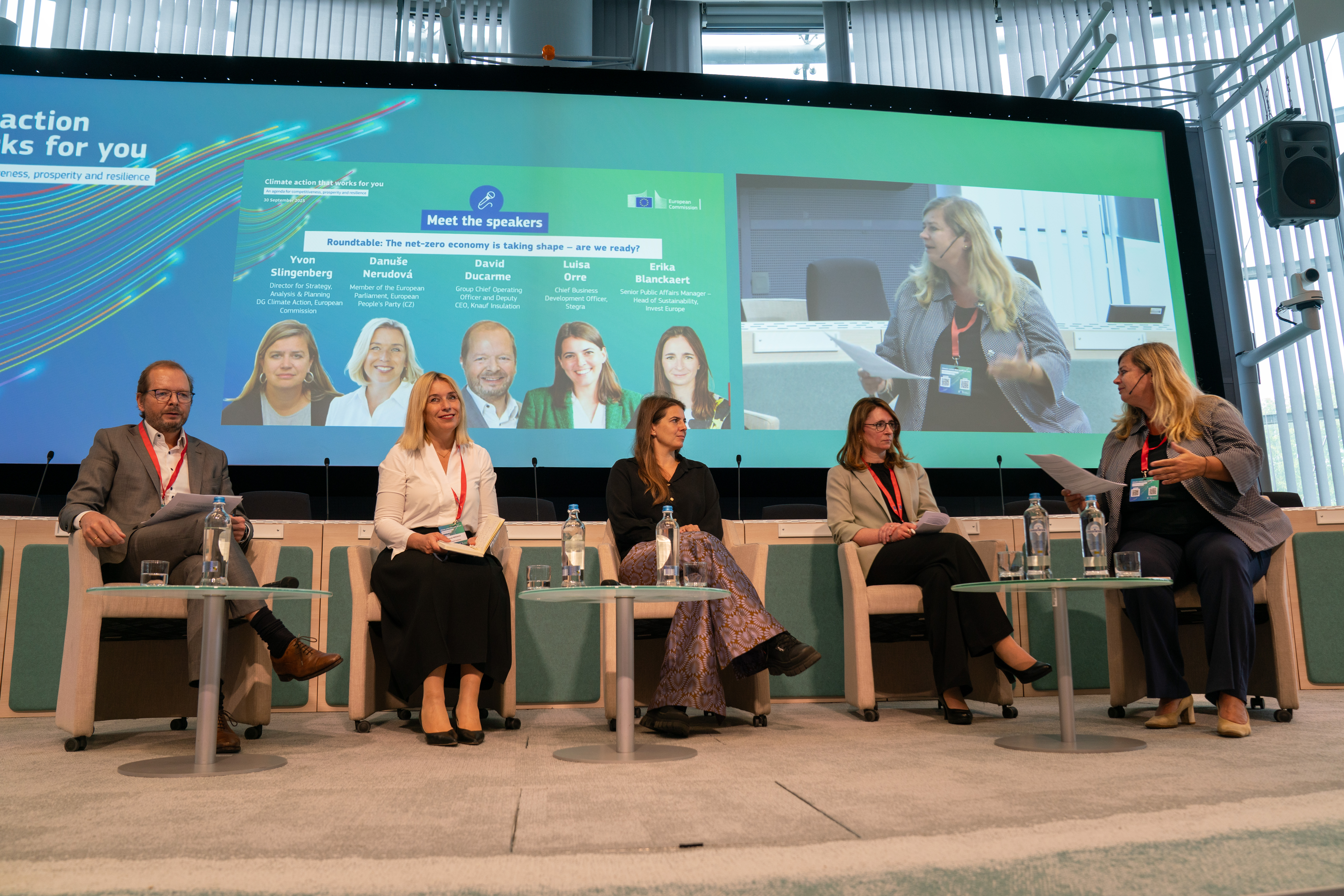
The Net-Zero Economy Takes Shape
The first roundtable discussion, “The Net-Zero Economy is Taking Shape – Are We Ready?”, focused on how the EU can turn the challenges of climate change into opportunities for innovation and growth.Moderated by Yvon Slingenberg, Director for Strategy, Analysis and Planning (DG CLIMA), the panel included Danuše Nerudová (Member of the European Parliament, EPP), David Ducarme (Group COO, Knauf Insulation), Luisa Orre (Chief Business Development Officer, Stegra), and Erika Blanckaert (Head of Sustainability, Invest Europe).Speakers discussed how to strengthen Europe’s industrial competitiveness while pursuing the goals of the Green Deal and accelerating the clean energy transition.
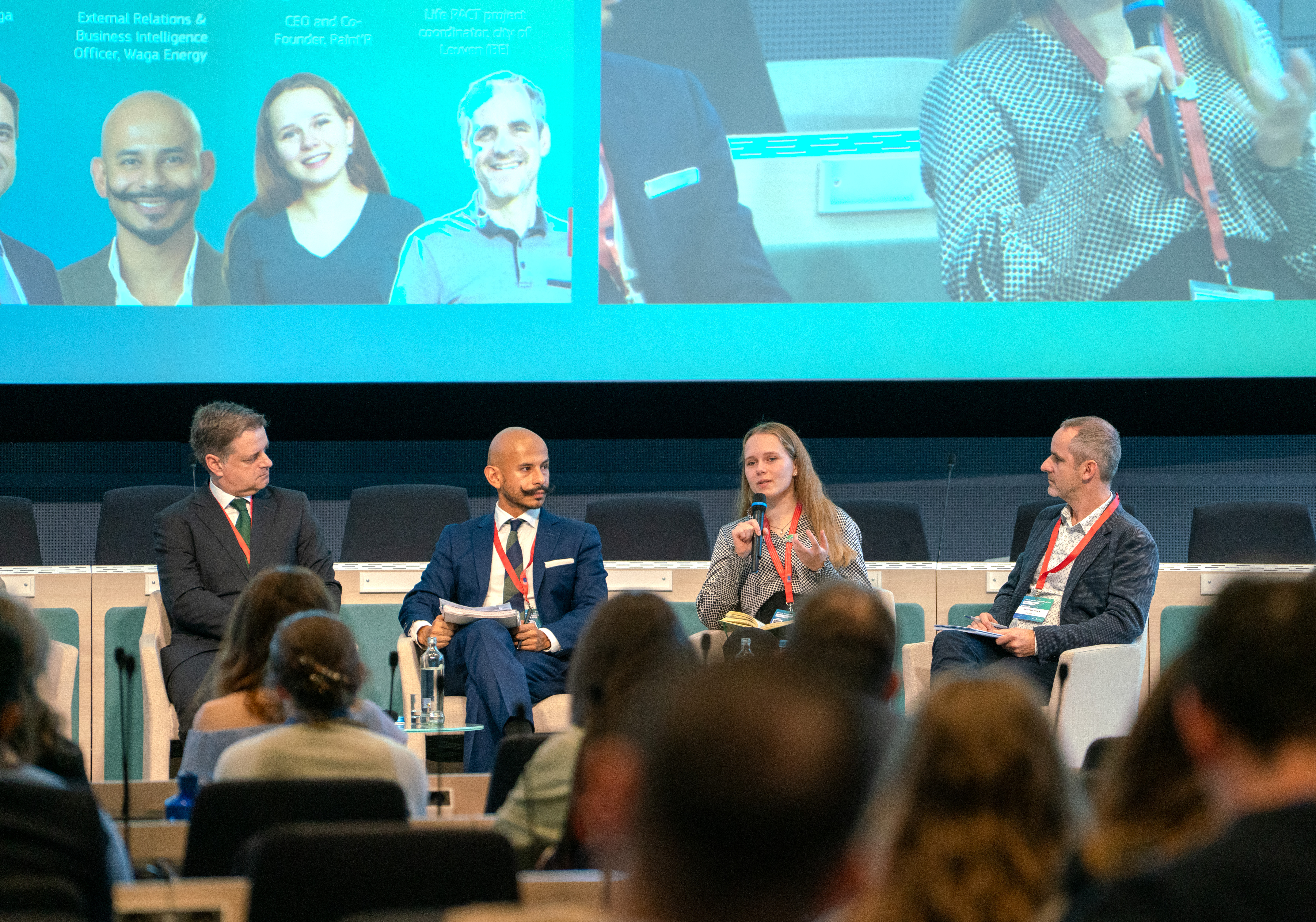
Stories from the Field
The morning continued with “Shaping the Future: Testimonials from the Field,” a session moderated by Beatriz Yordi, Director for Carbon Markets and Clean Mobility (DG CLIMA).Speakers shared practical examples of how climate action is transforming communities and industries across Europe. The panel featured Nađa Dizdarević (Coolect), Ricardo Rio (Mayor of Braga, Portugal, and European Climate Pact Ambassador), David Agudelo-Romero (Waga Energy), Sofie Winge-Petersen (Paint ’R, European Climate Pact Ambassador), and Baptist Vlaeminck (City of Leuven).Their stories demonstrated that the transition to a sustainable economy is not only achievable but already underway at the local level.
Workshops: Innovation, Diplomacy, and Accountability
In the afternoon, three workshops delved deeper into specific aspects of Europe’s climate transformation.
The first, “Accelerating the Clean Transition through Innovation,” moderated by Alexandre Paquot (DG CLIMA), gathered Sara Matthieu (Member of the European Parliament, Greens/EFA), Sarah Neumann (Austrian Ministry for Climate Action), Martin Pei (SSAB/HybrIT), and Nerijus Virbickas (Green Genius). The discussion explored policies and funding mechanisms that can accelerate the deployment of decarbonisation technologies across Europe.
The second workshop, “EU’s Climate Diplomacy and International Cooperation,” moderated by Diana Acconcia (DG CLIMA), brought together experts including Olivier Ascoët (Canada – Methane Emission Reduction), Cato van de Meeberg (South Korea – Offshore Wind Development), and Per Andersson (India – Industry Decarbonisation). Participants shared lessons learned from global cooperation and the role of diplomacy in climate progress.
The third workshop, “Climate Policy in Action: Reporting on Progress,” moderated by Vicky Pollard (DG CLIMA), featured Liza Leimane (European Environment Agency), Mia Moisio (NewClimate Institute), and Clara Calipel (Institute for Climate Economics). They discussed the importance of data and monitoring systems in tracking the EU’s progress toward its climate targets.
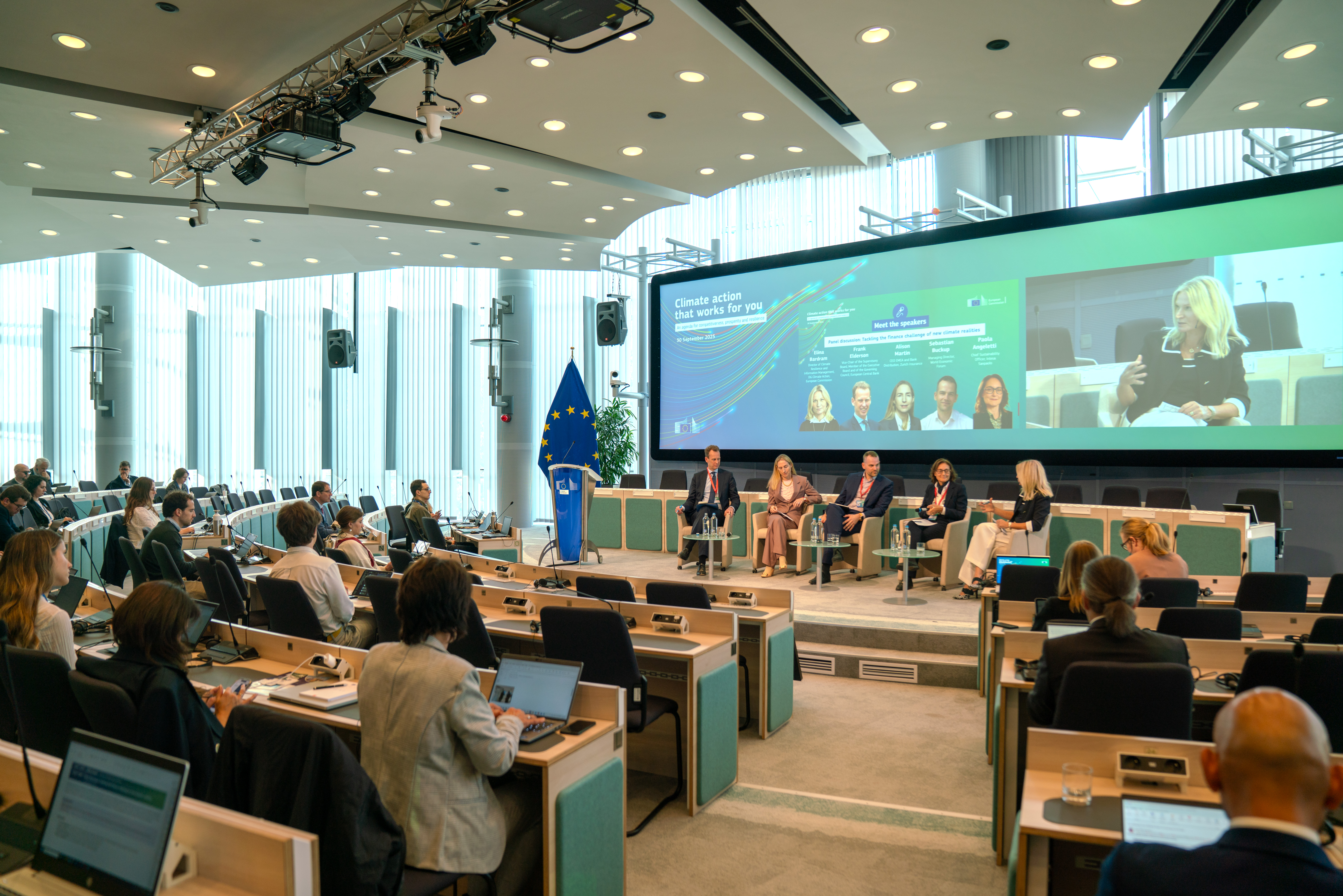
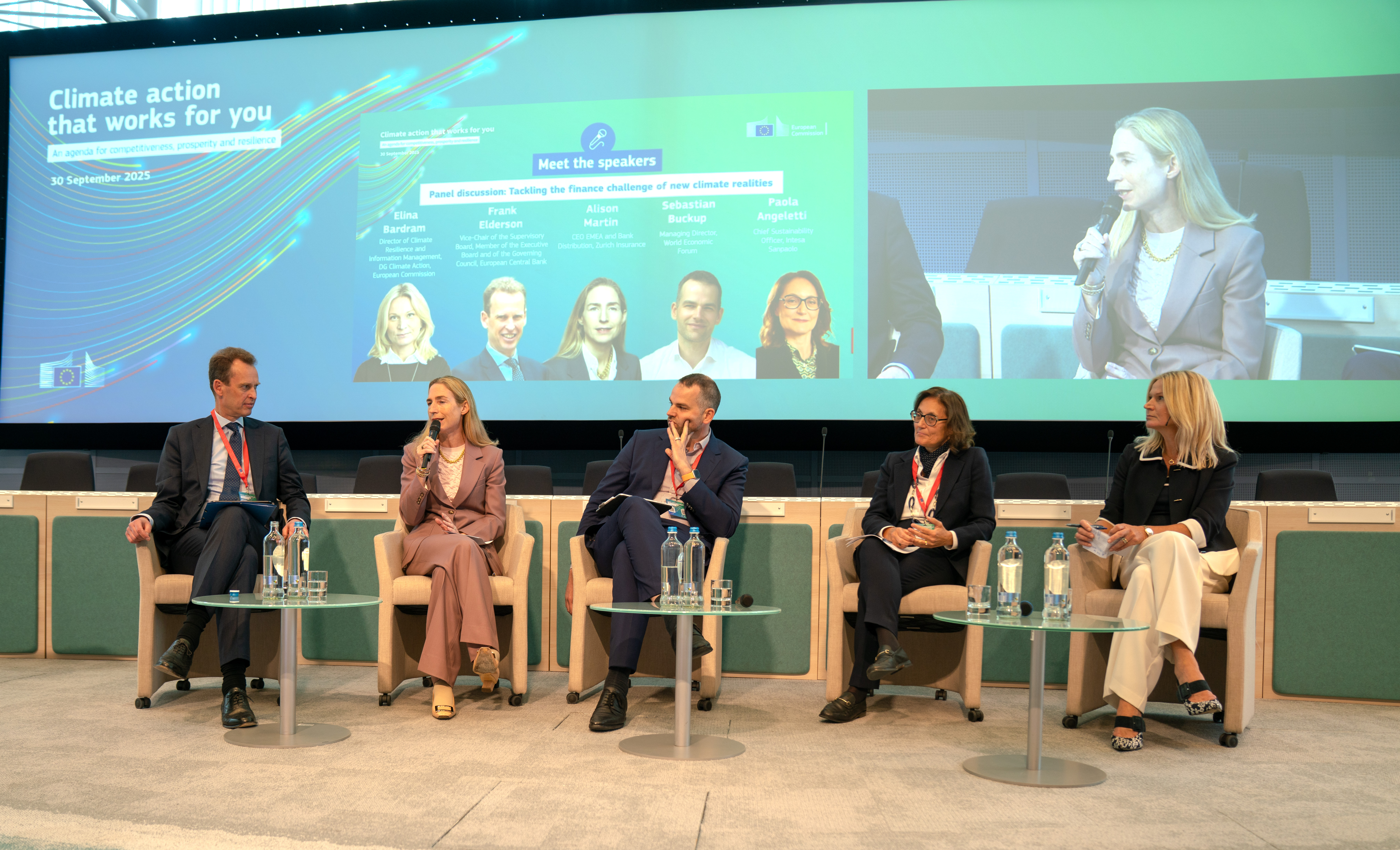
Mobilising Finance for the Green Transition
The panel “Tackling the Finance Challenge of New Climate Realities” explored the financial dimension of the climate transition. Moderated by Elina Bardram, Director for Climate Resilience and Information Management (DG CLIMA), the session featured Frank Elderson (European Central Bank), Alison Martin (Zurich Insurance), Sebastian Buckup (World Economic Forum), and Paola Angeletti (Intesa Sanpaolo).Speakers underlined the urgent need to align financial systems with climate goals, manage climate-related risks, and unlock private investments for mitigation and adaptation.
Local Leadership, Global Impact
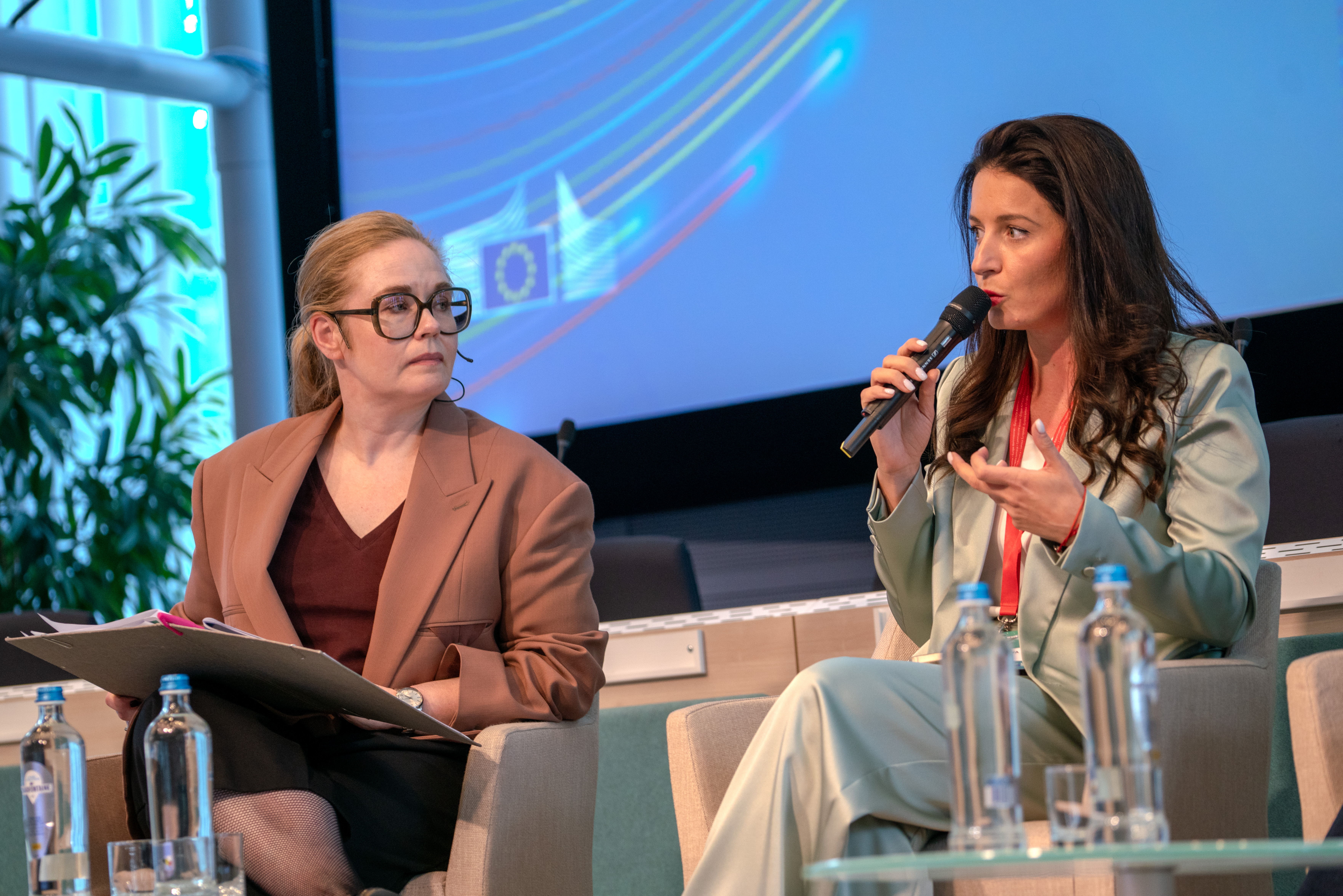
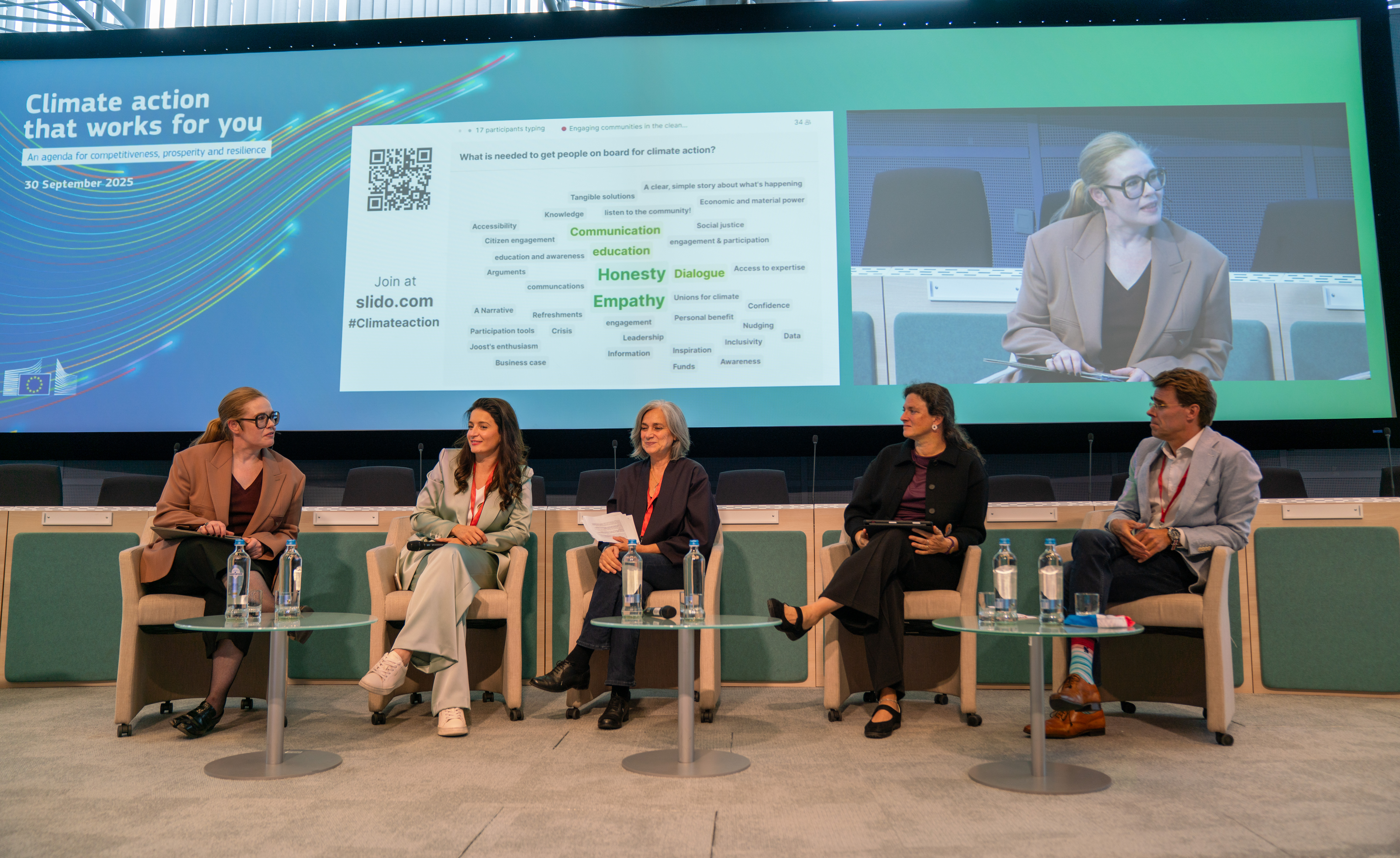
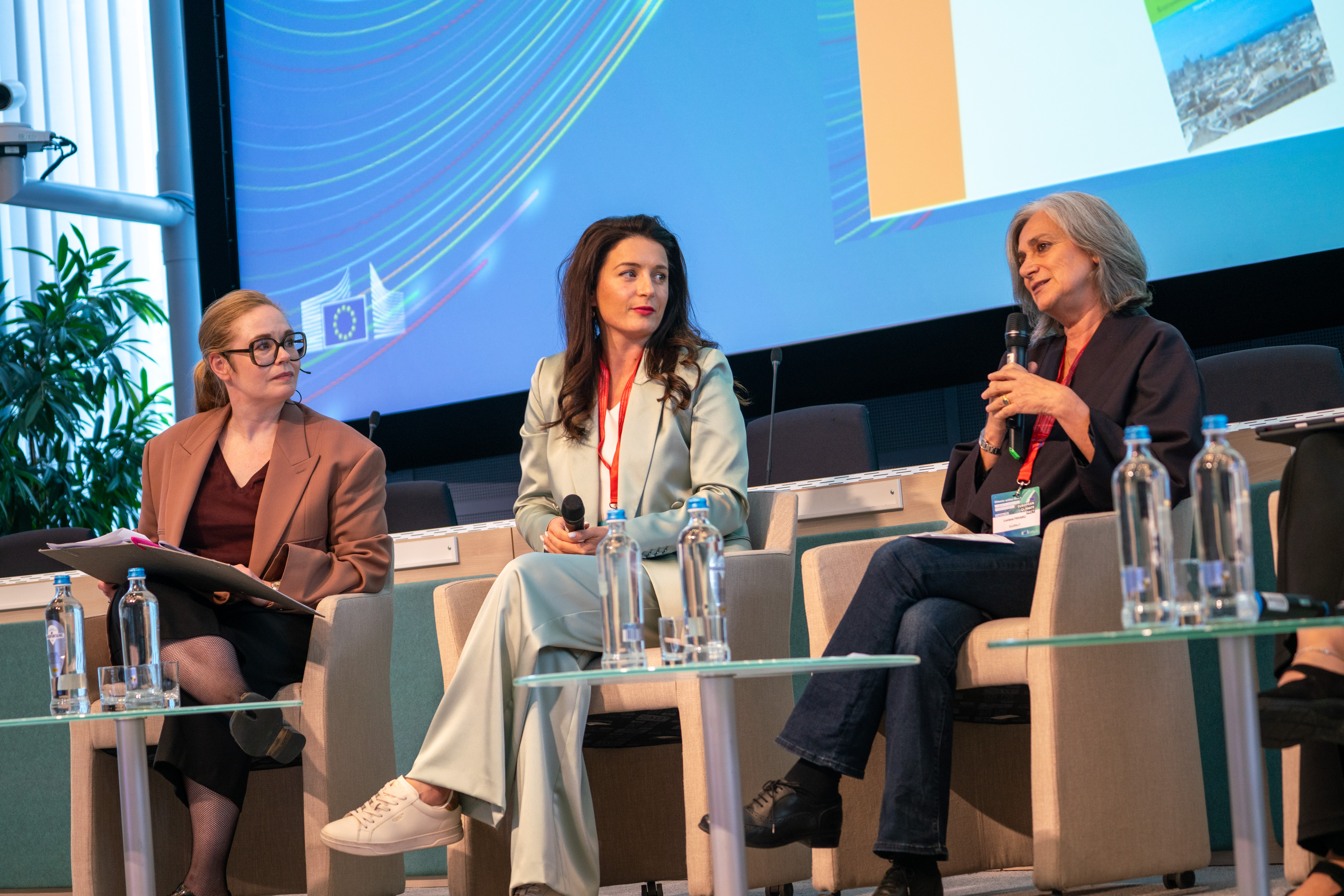
The late afternoon session, “Engaging Communities in the Clean Transition: Local and Regional Impact Stories,” highlighted the human dimension of the climate transition. Moderated by Anna-Kaisa Itkonen, the panel included Joost Brinkman (Cycling4Climate), Luciana Favaro (EuCliPa), Ulrike Feichtinger (Vice-Mayor of Gmunden, Austria), and Mariya Hristova (Founder of Agriventures, Bulgaria).
Representing emerging European regions, Mariya Hristova presented the work of Agriventures and its mission to bridge the gap between agrifood innovations and fragmented startup ecosystems. In her address, she spoke about the importance of empowering startups and communities to turn research into tangible climate solutions.
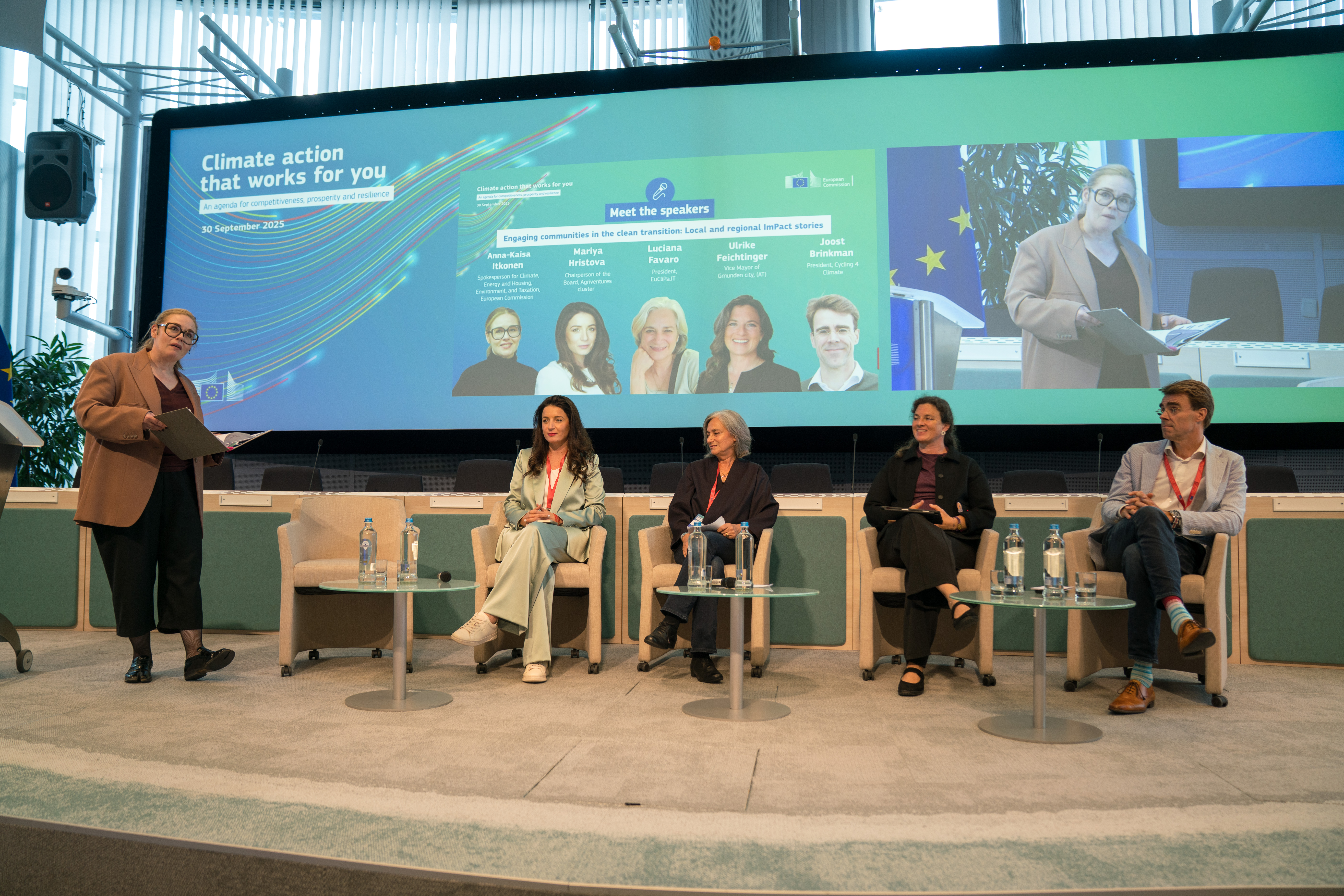
Mariya Hristova’s Address
“Hello everyone, my name is Mariya Hristova, and I am from Bulgaria. I am the Founder of Agriventures, a community and NGO born from a very simple but powerful mission: to bridge the gap between promising agrifood innovations and the fragmented startup ecosystem in emerging European regions.
When I first began working with agrifood innovators, I noticed that brilliant ideas—technologies that could drastically reduce emissions, save water, or cut down on chemical use—often remained stuck in labs or small pilots. Why? Because many startups in Eastern and Southern Europe don’t have the networks, mentorship, or visibility to scale. This means potential climate solutions risk being lost.
Agriventures was created to change that. In just a few years, we’ve supported over 25 startups in the agrifood sector. What makes me proud is that several of these are already making a measurable climate impact: biological crop treatments replacing chemical pesticides and fertilizers, smart irrigation systems reducing water use in drought-prone regions, and circular food products transforming waste into valuable ingredients.
Supporting agrifood startups is not only about innovation—it’s about empowering communities, making farming more resilient, and proving that climate action can also strengthen local economies. Every startup we help creates a ripple effect: jobs in rural areas, healthier food systems, and reduced pressure on our environment.
Our vision is to ensure that emerging European regions are not left behind in the green transition. Climate innovation should not stop at borders or concentrate only in hubs like Paris, Berlin, or Amsterdam. It must be inclusive, cross-border, and community-driven.
If I can leave you with one message today, it’s this: climate innovation needs ecosystems, not silos. By mentoring startups, connecting them to European opportunities, and ensuring their solutions can scale, we make sure that innovation works for farmers, for citizens, and for the climate.”
Reflections from European Leadership
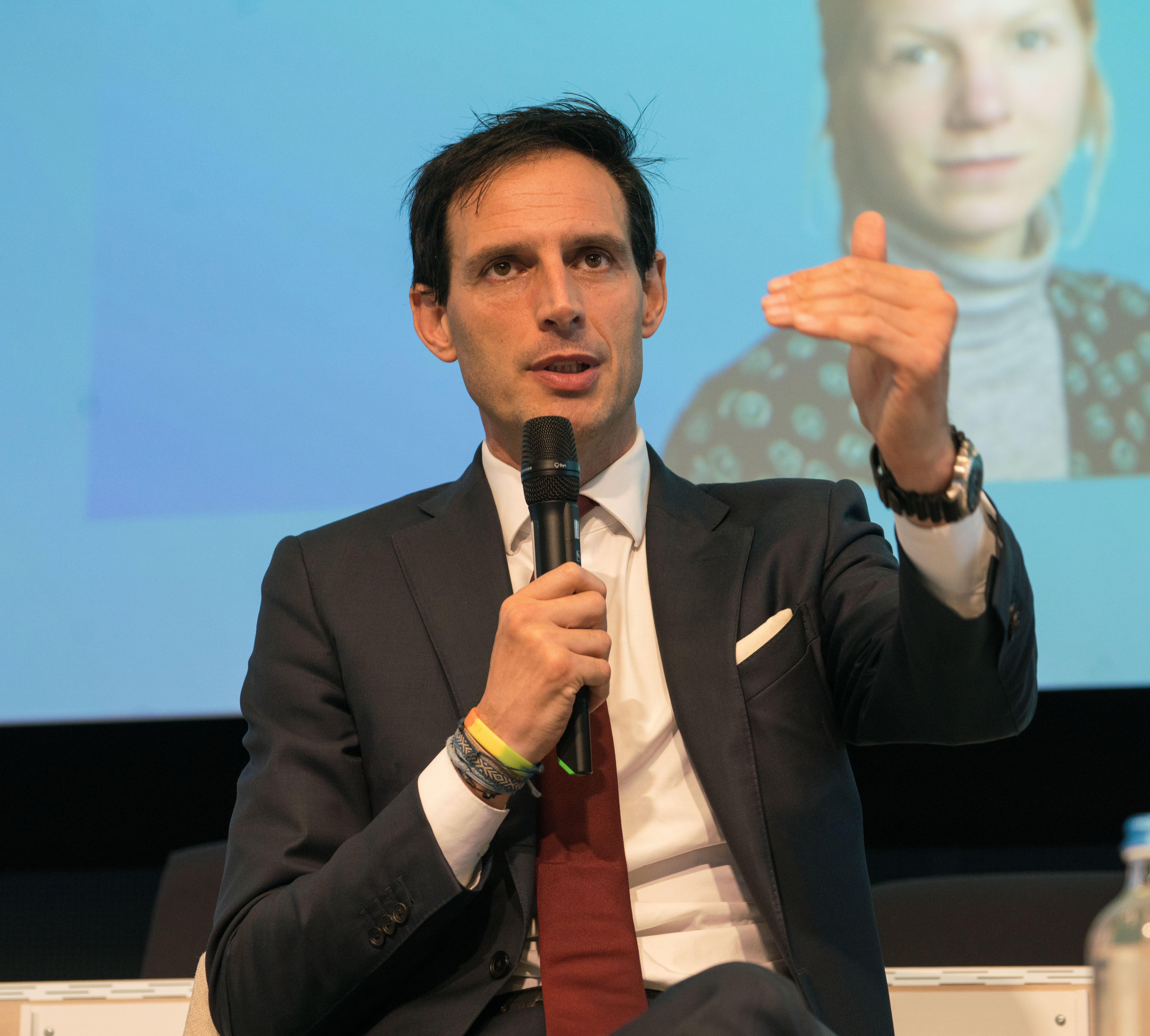
The closing conversation featured Wopke Hoekstra, European Commissioner for Climate, Net Zero and Clean Growth, interviewed by Alice Hancock, EU correspondent at the Financial Times. Commissioner Hoekstra shared his vision for the future of European and global climate policy, emphasizing the importance of maintaining ambition, fostering innovation, and ensuring that the transition delivers prosperity for all citizens.
A Shared Commitment to a Sustainable Future
The event concluded with a networking reception, where participants from across Europe’s climate and innovation ecosystem discussed new partnerships and future collaborations.
The day reflected a clear consensus: climate action is not only an environmental necessity but an opportunity to redefine competitiveness, prosperity, and resilience for the European Union.
For Agriventures and Mariya Hristova, participation in this event reaffirmed a shared belief that Europe’s green transition must include its emerging regions—and that local innovation, when supported by strong ecosystems, can drive global impact.
For press and partnership inquiries:Mariya HristovaFounder, AgriventuresEmail: mariajordanovahristova@gmail.comWebsite: www.agriventures.co
Tags
Related Articles
Continue reading our latest insights and updates from the AgriVentures ecosystem.

Biotechnology, Agri-Inputs and Biosecurity: Why the Future of Farming Needs a Wider Conversation in Sofia
Agriculture is undergoing a quiet transformation. Genomic tools, precision biological solutions, and new generations of crop protection and plant nutrition products are changing what is possible in the field and along the whole food chain. At the same time, the same advances raise questions that the sector is only beginning to ask. Who controls the genetic resources and seeds we depend on? How do we manage biosecurity when biological agents and genomic technologies can be used for more than...

Where Agrifood Biotech and Research Funding Is Actually Going in 2026
Basic research doesn't fund itself, and in agrifood, the gap between a promising lab result and a fundable project often comes down to knowing which of a dozen overlapping EU programmes to approach first. Food safety science, biotech platforms, and multi-country research consortia each follow their own funding logic, and 2026 has brought fresh calls across all three. Two Live Examples Worth Studying Safe-Agri, one of AgriVentures' active projects, is reinforcing the security assessment...

VerAgro launches a free self-assessment to help farms measure - and improve - their sustainability
"How sustainable is your farm?" It's a question most producers can answer instinctively, but rarely with hard numbers. A new Bulgarian startup wants to change that. VerAgro, a Bulgaria-based agtech startup, has launched a free online self-assessment that gives farms and processors a clear, structured picture of where they stand on sustainability — and what to do next. A 20-minute check-up for your farm The tool works like a health check-up for your operation. Farmers and processors answer 57...

A New Door Is Opening for Bulgarian Farmers and Agri-Innovators - And It's Fully Funded
For years, the biggest barrier between Bulgarian agriculture and Europe's most advanced farms hasn't been ambition. It's been access — to the right rooms, the right people, and the budget to get there. AgriVentures' new Missions program was built to remove exactly that barrier, and it does it in a way few programs in the region ever have: by covering the full cost of getting Bulgarian farmers, entrepreneurs, scientists, and companies in front of Europe's leading agri-food innovators. If you...

Inside projects.agriventures.co: Your Gateway to EU AgriFood Innovation
AgriVentures has launched projects.agriventures.co, a dedicated portal that brings the full portfolio of our EU-funded initiatives into one place. Where agriventures.co connects agrifood innovators with funding, the Projects site shows what happens next: the live programmes, Living Lab pilots, and network activity that funding makes possible. Here's what you'll find on the site — and how each part of our community can put it to work. A Live Portfolio of EU Projects The homepage opens with our...

Understanding Biomass Flows in Europe: A €6M Horizon Europe Call Agrifood Founders Shouldn't Miss
A question we've been getting a lot lately, including from our own LinkedIn community, is some version of: "Can my startup actually apply for this, and how?" This time it's about Understanding biomass flows in Europe (HORIZON-CL6-2026-01-CIRCBIO-05), a Horizon Europe call with a total budget of €6,000,000 that opened on 17 April 2026 and closes on 17 September 2026. It's exactly the kind of opportunity worth breaking down properly, because the honest answer is "yes, but not the way most...
Never Miss an Update
Join our community to receive the latest insights, funding opportunities, and industry news from AgriVentures.