Future Harvest: New European Program Supports the Next Generation of Farmers

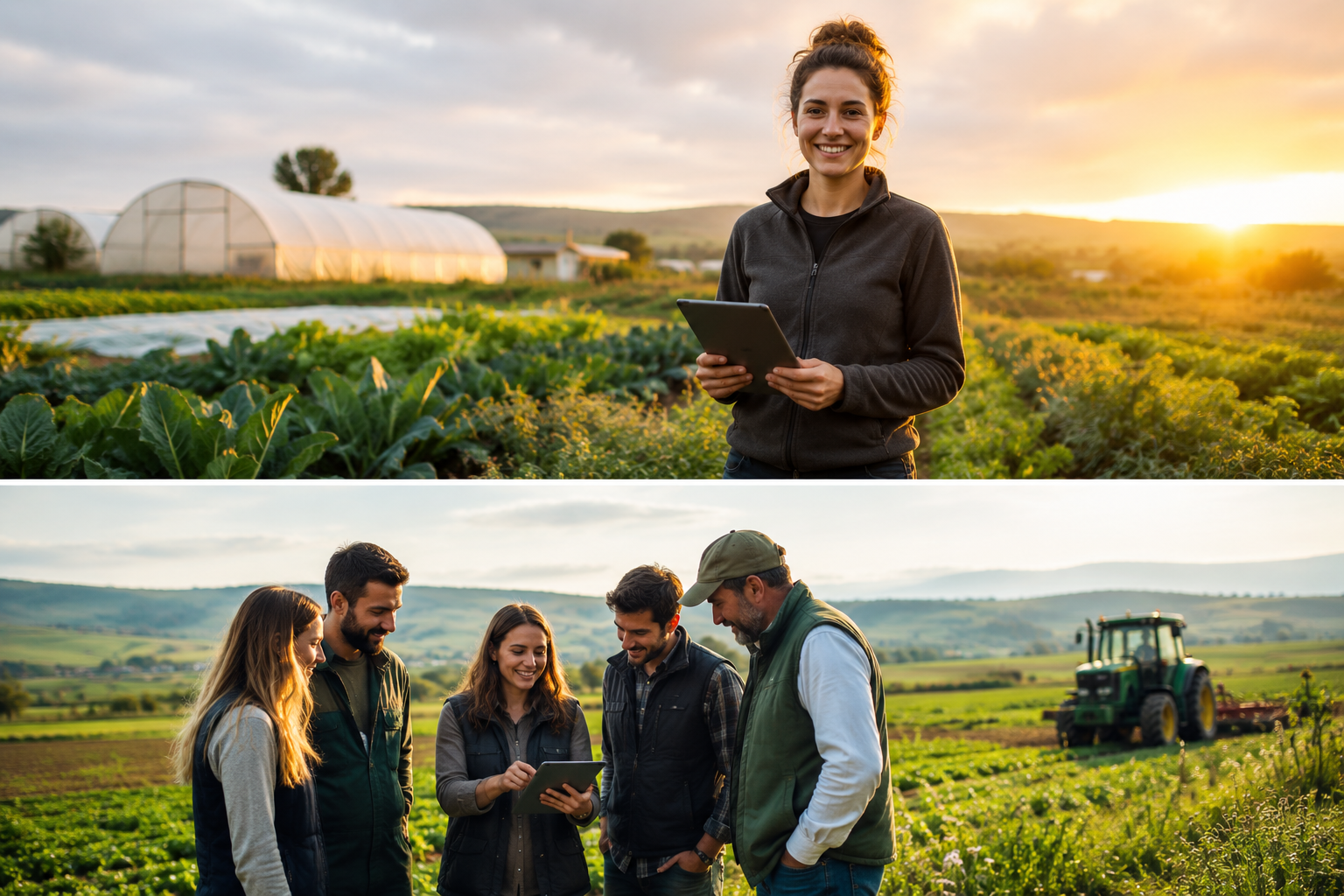
EIT Food and the PepsiCo Foundation launch Future Harvest, a new European initiative designed to strengthen generational renewal in farming, support young farmers, and build a more resilient and sustainable food system across Europe.
Europe’s agricultural sector is facing a growing demographic challenge.
As the average age of farmers continues to rise, fewer young people are entering the profession, creating concerns about the long-term resilience of food production, rural communities, and agricultural innovation. To address this challenge, EIT Food and the PepsiCo Foundation have launched Future Harvest, a new European program aimed at supporting young and next-generation farmers with the skills, knowledge, and networks needed to succeed in modern agriculture.
A Growing Generational Gap in European Agriculture
According to European Commission and Eurostat data, only around 11–12% of farm managers in Europe are under the age of 40. At the same time, farmers are navigating increasing pressures from climate change, rising production costs, market volatility, and changing consumer expectations. These challenges are particularly significant for small and medium-sized farms, which play a critical role in maintaining rural livelihoods and food security. The issue of generational renewal has become a strategic priority for the European Union, with policymakers recognizing that attracting and retaining young farmers is essential for ensuring a competitive, innovative, and sustainable agricultural sector in the coming decades.
What Is Future Harvest?
Future Harvest is a Europe-wide program funded by the PepsiCo Foundation and implemented by EIT Food in collaboration with local partners. During 2026, the initiative is expected to engage approximately 900 young and next-generation farmers across France, Spain, the Netherlands, Poland, and Türkiye.
The program combines online learning with practical farm-based experiences, allowing participants to gain valuable knowledge that can be directly applied to their farming operations. Training areas include:
Regenerative and climate-resilient agriculture
Digital farming technologies and agritech solutions
Farm business management
Entrepreneurship and leadership development
Financial planning and decision-making
Participants will also benefit from mentoring, peer-to-peer learning, field visits, farm clinics, and networking opportunities through the Future Harvest FarmHub.
Building More Resilient Farming Businesses
A key objective of Future Harvest is to help young farmers improve the viability and resilience of their businesses while adapting to environmental and economic challenges. By providing access to innovation ecosystems, practical expertise, and modern agricultural tools, the program seeks to empower participants to implement sustainable solutions on their farms and strengthen their long-term competitiveness.
The initiative aligns closely with broader European efforts to support generational renewal in agriculture, including recent EU strategies aimed at improving access to land, finance, skills development, innovation, and rural opportunities for young farmers.
Why Generational Renewal Matters
Generational renewal is increasingly viewed as one of the most important factors shaping the future of European agriculture. Without sufficient support for new entrants, the sector risks losing critical knowledge, innovation capacity, and productive farmland.
Young farmers are often more likely to adopt new technologies, implement sustainable practices, and explore innovative business models that can improve both profitability and environmental performance.
By investing in young farmers today, initiatives such as Future Harvest aim to ensure that Europe’s food systems remain productive, resilient, and capable of meeting future sustainability and food security challenges.
Looking Ahead
As Future Harvest begins implementation across participating countries, it represents a significant step toward strengthening the next generation of agricultural leaders. By combining education, innovation, mentorship, and practical experience, the program offers a comprehensive approach to supporting young farmers and encouraging long-term renewal across Europe’s farming sector.
The role of Agriventures in supporting agrifood innovation
As the agritech startup ecosystem grows across Europe, initiatives such as Agriventures are helping connect entrepreneurs, researchers, investors, and policymakers working in agriculture and food innovation.
Agriventures focuses on supporting agrifood startups, biotechnology innovation, and access to European funding for agriculture, while also helping entrepreneurs navigate the complex landscape of startup financing, venture capital, and research commercialization.
By strengthening connections between startups, research institutions, investors, and farmers, Agriventures contributes to building a stronger agricultural innovation ecosystem that can accelerate the transition toward sustainable agriculture and resilient food systems.
Through knowledge sharing, events, and ecosystem building, Agriventures helps ensure that promising agritech innovations can scale and reach farmers, food producers, and global markets.
Tags
Related Articles
Continue reading our latest insights and updates from the AgriVentures ecosystem.

A New International Research Community on Agrifood Law and Food Systems Launches in Brussels
The International Joint Research Group on Agrifood Law and Food Systems was launched in Brussels on 15 October 2026. Agriventures took part in the founding discussions. The International Joint Research Group on Agrifood Law and Food Systems (IJRG-ALFS) was officially launched on 15 October 2026 at Vrije Universiteit Brussel | It took place during the 5th Food Law, Policy & Diplomacy Conference, opened by an FAO keynote on the right to food | Agriventures contributed to the discussions, with...

🌱 SYSARM Project: Join Our Regional Learning Alliances!
The SYSARM (Systems Thinking for Agricultural Risk Management) project is entering an important phase: the development of Regional Learning Alliances (RLAs) that bring together key stakeholders to improve agricultural risk management through systems thinking, collaboration, and knowledge exchange. 🤝 Why join a SYSARM Regional Learning Alliance? By participating, your organisation can: ✅ Share your expertise and needs — contribute your practical experience and help identify the key...

World Food Day 2026: 50 Funding Opportunities for Food Security and Sustainable Food Systems
To mark World Food Day, Agriventures has published a free guide to 50 funding calls, prizes and programmes for food security and sustainable food systems, each with a direct link to the official call page. World Food Day falls on 16 October, the date FAO was founded in 1945. This year's message, “Innovate today. Nourish tomorrow.”, puts innovation at the centre: not only data, AI and robots, but also traditional knowledge, existing solutions used in new ways, and better methods to produce...

Biotechnology, Agri-Inputs and Biosecurity: Why the Future of Farming Needs a Wider Conversation in Sofia
Agriculture is undergoing a quiet transformation. Genomic tools, precision biological solutions, and new generations of crop protection and plant nutrition products are changing what is possible in the field and along the whole food chain. At the same time, the same advances raise questions that the sector is only beginning to ask. Who controls the genetic resources and seeds we depend on? How do we manage biosecurity when biological agents and genomic technologies can be used for more than...

Where Agrifood Biotech and Research Funding Is Actually Going in 2026
Basic research doesn't fund itself, and in agrifood, the gap between a promising lab result and a fundable project often comes down to knowing which of a dozen overlapping EU programmes to approach first. Food safety science, biotech platforms, and multi-country research consortia each follow their own funding logic, and 2026 has brought fresh calls across all three. Two Live Examples Worth Studying Safe-Agri, one of AgriVentures' active projects, is reinforcing the security assessment...

VerAgro launches a free self-assessment to help farms measure - and improve - their sustainability
"How sustainable is your farm?" It's a question most producers can answer instinctively, but rarely with hard numbers. A new Bulgarian startup wants to change that. VerAgro, a Bulgaria-based agtech startup, has launched a free online self-assessment that gives farms and processors a clear, structured picture of where they stand on sustainability — and what to do next. A 20-minute check-up for your farm The tool works like a health check-up for your operation. Farmers and processors answer 57...
Never Miss an Update
Join our community to receive the latest insights, funding opportunities, and industry news from AgriVentures.