USDA Invests $86.6 Million in Specialty Crops: Strengthening Innovation, Research and Market Competitiveness
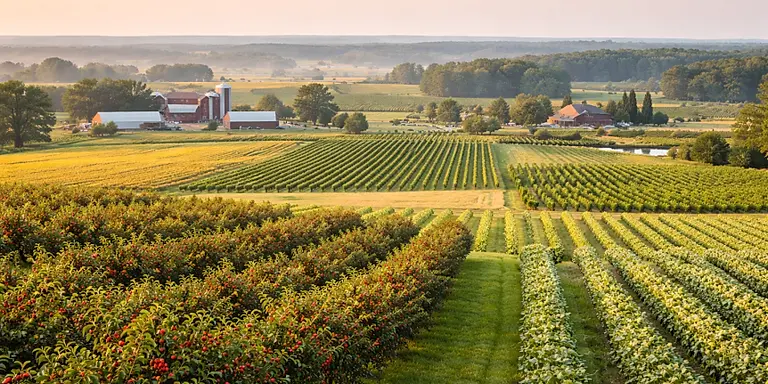
The new US investment will support 609 projects across 56 states and territories, targeting research, food safety, pest management and market development for specialty crop producers.
The United States Department of Agriculture (USDA) has announced an investment of $86.6 million in grants for the specialty crop industry, reinforcing the importance of innovation, research and market access in strengthening agricultural competitiveness.
Announced on 13 October 2026, the funding will be distributed through the Specialty Crop Block Grant Program (SCBGP), supporting approximately 609 projects across 56 states and territories.
The initiative focuses on improving the competitiveness of producers growing fruits, vegetables, tree nuts, dried fruits, horticultural products and nursery crops. These sectors play an important role in food security, rural employment and the diversification of agricultural markets.
Turning agricultural challenges into innovation opportunities
The funding addresses several challenges facing specialty crop producers, from increasing production costs and plant diseases to evolving consumer expectations and the need for more efficient supply chains.
Supported projects will cover research and development, food safety improvements, new crop and seed varieties, pest and disease management, consumer education and measures to improve the affordability and accessibility of specialty crops.
These priorities demonstrate how public investment can help connect scientific research with practical agricultural needs.
Better-performing crop varieties, improved production practices and stronger plant health management can help farmers respond to changing environmental conditions while maintaining productivity and product quality.
The programme also recognises that competitiveness depends on more than production alone. Marketing, distribution and consumer awareness are essential to ensuring that agricultural businesses can reach customers and capture greater value from their products.
State-level projects reflect regional agricultural priorities
The investment will support projects adapted to the specific needs of agricultural producers across the country.
Michigan will receive more than $2.64 million for initiatives involving crops such as apples, asparagus, blueberries, herbs, mushrooms and grapes. Georgia will direct more than $1.7 million towards research, education, outreach and marketing activities for products including pecans, blueberries, peaches, strawberries and onions.
Other examples include more than $800,000 for projects in Ohio, over $1.1 million for initiatives in Pennsylvania, and more than $2 million for projects in Texas. Florida will receive over $4.3 million for activities supporting crops such as mangoes, blueberries, sweet corn and muscadine grapes.
This regional approach illustrates the value of tailoring agricultural innovation to local production systems, market opportunities and industry challenges.
What can European agriculture learn?
Although the programme is designed for US producers, its priorities are relevant to the European agricultural sector. European farmers face similar challenges involving climate resilience, plant health, input costs, market competitiveness and the adoption of new technologies.
The initiative highlights several important lessons for agricultural innovation ecosystems:
Research must reach the farm. Investment in crop science and new varieties creates greater value when research institutions collaborate with producers and translate findings into practical solutions.
Competitiveness requires a value-chain approach. Food safety, marketing, distribution and consumer engagement are as important as improving yields.
Regional cooperation matters. Funding projects around local crop priorities can help address specific production challenges and strengthen rural economies.
Innovation needs accessible funding. Well-structured grant programmes can help organisations develop and test solutions that individual farmers or small businesses might struggle to finance independently.
For European agri-food businesses, research organisations, cooperatives and innovation networks, these priorities reinforce the importance of collaboration between farmers, technology developers, public authorities and market actors.
Building more competitive agricultural systems
The USDA investment is a reminder that strengthening agriculture requires coordinated support for research, practical innovation and market development. By financing hundreds of projects across diverse production regions, the programme aims to help specialty crop businesses improve their position in domestic and international markets.
For the wider agricultural innovation community, the central takeaway is clear: resilient and competitive farming depends on connecting knowledge, funding and market opportunities with the needs of producers.
At AgriVentures, we follow initiatives that support agricultural innovation, strengthen food systems and create opportunities for collaboration across the agri-food value chain.
Check out our guides for funding opportunities
https://projects.agriventures.co/resources
Agriventures Connect 3.0 is coming on 20th of April 2027 in Sofia, Bulgaria
https://connect.agriventures.co/
The role of Agriventures in supporting agrifood innovation
As the agritech startup ecosystem grows across Europe, initiatives such as Agriventures are helping connect entrepreneurs, researchers, investors, and policymakers working in agriculture and food innovation.
Agriventures focuses on supporting agrifood startups, biotechnology innovation, and access to European funding for agriculture, while also helping entrepreneurs navigate the complex landscape of startup financing, venture capital, and research commercialization.
By strengthening connections between startups, research institutions, investors, and farmers, Agriventures contributes to building a stronger agricultural innovation ecosystem that can accelerate the transition toward sustainable agriculture and resilient food systems.
Through knowledge sharing, events, and ecosystem building, Agriventures helps ensure that promising agritech innovations can scale and reach farmers, food producers, and global markets.
Tags
Related Articles
Continue reading our latest insights and updates from the AgriVentures ecosystem.

🌱 SYSARM Project: Join Our Regional Learning Alliances!
The SYSARM (Systems Thinking for Agricultural Risk Management) project is entering an important phase: the development of Regional Learning Alliances (RLAs) that bring together key stakeholders to improve agricultural risk management through systems thinking, collaboration, and knowledge exchange. 🤝 Why join a SYSARM Regional Learning Alliance? By participating, your organisation can: ✅ Share your expertise and needs — contribute your practical experience and help identify the key...

World Food Day 2026: 50 Funding Opportunities for Food Security and Sustainable Food Systems
To mark World Food Day, Agriventures has published a free guide to 50 funding calls, prizes and programmes for food security and sustainable food systems, each with a direct link to the official call page. World Food Day falls on 16 October, the date FAO was founded in 1945. This year's message, “Innovate today. Nourish tomorrow.”, puts innovation at the centre: not only data, AI and robots, but also traditional knowledge, existing solutions used in new ways, and better methods to produce...

Biotechnology, Agri-Inputs and Biosecurity: Why the Future of Farming Needs a Wider Conversation in Sofia
Agriculture is undergoing a quiet transformation. Genomic tools, precision biological solutions, and new generations of crop protection and plant nutrition products are changing what is possible in the field and along the whole food chain. At the same time, the same advances raise questions that the sector is only beginning to ask. Who controls the genetic resources and seeds we depend on? How do we manage biosecurity when biological agents and genomic technologies can be used for more than...

Where Agrifood Biotech and Research Funding Is Actually Going in 2026
Basic research doesn't fund itself, and in agrifood, the gap between a promising lab result and a fundable project often comes down to knowing which of a dozen overlapping EU programmes to approach first. Food safety science, biotech platforms, and multi-country research consortia each follow their own funding logic, and 2026 has brought fresh calls across all three. Two Live Examples Worth Studying Safe-Agri, one of AgriVentures' active projects, is reinforcing the security assessment...

VerAgro launches a free self-assessment to help farms measure - and improve - their sustainability
"How sustainable is your farm?" It's a question most producers can answer instinctively, but rarely with hard numbers. A new Bulgarian startup wants to change that. VerAgro, a Bulgaria-based agtech startup, has launched a free online self-assessment that gives farms and processors a clear, structured picture of where they stand on sustainability — and what to do next. A 20-minute check-up for your farm The tool works like a health check-up for your operation. Farmers and processors answer 57...

A New Door Is Opening for Bulgarian Farmers and Agri-Innovators - And It's Fully Funded
For years, the biggest barrier between Bulgarian agriculture and Europe's most advanced farms hasn't been ambition. It's been access — to the right rooms, the right people, and the budget to get there. AgriVentures' new Missions program was built to remove exactly that barrier, and it does it in a way few programs in the region ever have: by covering the full cost of getting Bulgarian farmers, entrepreneurs, scientists, and companies in front of Europe's leading agri-food innovators. If you...
Never Miss an Update
Join our community to receive the latest insights, funding opportunities, and industry news from AgriVentures.