Women in Entrepreneurship and Agrifood: A Comparative Snapshot Across 15 Countries

This article distills key statistics on women’s roles in entrepreneurship and the agrifood sector across Central and Eastern Europe. Unless noted otherwise, figures are drawn from National Statistical Institutes, Eurostat, the World Bank, GEM (Global Entrepreneurship Monitor), and national agencies referenced in “Overview of the Situation of Women’s Entrepreneurship in Agrifood.”

Big Picture: Shared Patterns—and Sharp Differences
Across the region, women’s entrepreneurial participation is rising, yet gaps persist in business ownership, sector choice, leadership roles, access to land and capital, and farm size. In agrifood, women’s overall employment share has trended downward for decades as economies shift toward services—but women still hold a substantial share of farm management in several countries, pointing to leadership potential despite structural constraints.
Common threads
Lower TEA (Total Early-stage Entrepreneurial Activity) for women than men in most countries.
Agricultural employment among women declining since the 1990s; service sectors absorb more female labor.
Leadership footholds remain: in multiple countries, one quarter to nearly half of farm managers are women.
Structural constraints recur: smaller average farm sizes, limited land/property ownership, thinner financing networks, and fewer scale-up opportunities.
Country Snapshots
Bulgaria
~30% of company owners are women (near the EU average). Predominantly small retail/services; women-owned consultancies are rising.
Growing uptake of digital tools among women entrepreneurs.
Women’s agricultural employment share fell from 12% (1991) → 4% (2021); yet 25% of women in agriculture are farm managers (2016), underscoring leadership roles within a shrinking base.
Croatia
TEA: men 17% vs women 9.5%; established business ownership 4.3% men vs 2.5% women.
In agriculture/mining TEA: 24.2% men vs 14.4% women.
Female agricultural employment: 25% (1991) → 5% (2021); 26% of farm managers are women (2016).
Czechia
~15% of workers are self-employed (above EU avg); men are twice as likely as women to be self-employed. Typical female founder ~45 years, often with one child.
Women employing others: 15.1% (vs 19.5% men).
Female agricultural employment: 7% (1991) → 2% (2010–2021); 12% of women in agriculture held managerial roles (2016)—among the lowest in the region.
Estonia
Strong startup ecosystem; female founder share rising 15% (2020) → 17% (2022); ~20% of startups have a woman founder.
Sectors led by women-founded startups: health (30%), education (28%), communications (23%); ~10% of female startup employees are managers.
Female agricultural employment: 14% (1991) → 1% (2021); 33% of farm managers are women (2016)—among the region’s highest.
Hungary
TEA: women 7.9% vs men 11.9%; established business ownership 4.5% women vs 9.2% men.
Barriers: financing access, registration costs, limited savings, high interest, info gaps, skills/mentoring deficits.
Female agricultural employment: 12% (1991) → 3% (2021); 27% of farm managers are women (2016).
Latvia
TEA: men 17.8% vs women 10.7%; established ownership 16.3% men vs 8.3% women.
Agriculture/mining TEA: 19.1% men vs 2.8% women.
Female agricultural employment: 20% (1991) → 4% (2021); leadership strong—44.8% of farm managers are women (2016).
Lithuania
TEA: men 16.6% vs women 9%; established ownership 10.9% men vs 5.7% women.
Ease-of-start perception: 31.9% women vs 41.4% men.
Female agricultural employment: 22% (1991) → 4% (2021); 45% of farm managers are women (2016)—among Europe’s highest.
Montenegro
(2021) 23.7% of legal entities had a woman owner/administrator; women are 31.34% of registered natural-person entrepreneurs.
Property: 4% of women own real estate; 8% own land; ~15% registered as farm owners.
MSMEs run by women: ~23% (2021–2022); women largely in services; none own medium/large firms.
North Macedonia
Women own/lead ~29% of companies (rising 2019–2021), but men still 71%. Women hold 32% of leadership roles.
Women-led firms are mostly micro (1–4 employees) and concentrated in trade, processing, professional/technical services.
Regional female ownership/admin ranges ~23%–35%; only 0.8% of business owners in agriculture are women; gender-disaggregated sector data remain limited.
Poland
TEA nearly equal (men 1.7%, women 1.6%—note: country’s profile differs from others).
Established ownership 10% men vs 9.6% women (near parity).
Female agricultural employment: 26% (1991) → 7% (2021); 29% of farm managers are women (2016).
Farm size/value gap: women’s farms ~6 ha / €6k vs men’s ~12 ha / €21k.
Romania
TEA: men 10% vs women 6.6%; established ownership 10.1% men vs 7.1% women.
Agriculture/mining TEA bucks trend: 15.3% women vs 12.5% men.
Female agricultural workforce share: 42% (1991) → 25% (2021); 30% of farm managers are women (2021).
Rural women entrepreneurs favor trade/services; early financing often ≤€5,000 personal/family funds; lower use of bank finance.
Serbia
2021→2022: entrepreneurs 221,541 → 290,387; companies 102,215 → 118,158; women-led share 28.1% → 31.2%.
New business registrations: 12.3% women vs 9.9% men; closures also higher among women.
Female agricultural employment: 30% (1991) → 12% (2021); 19.5% of farm holders are women (2018). Women manage ~110k of ~563k family farms; smaller land/livestock shares than men.
Slovakia
TEA: men 11.9% vs women 9.5%; established ownership 9.1% men vs 4% women.
Ease-of-start perception: 24.5% men vs 16.5% women.
Agriculture/mining TEA: 19.1% men vs 6.3% women.
2022: female farm workers +4.0%, self-employed women in agriculture +120% (to ~2,200); workforce aging (avg female age 48.1).
Slovenia
TEA: men 10% vs women 5.6%; established ownership 9.1% men vs 4% women.
Ease-of-start: 70.7% men vs 64.5% women (both optimistic).
Female agricultural employment: 11% (1991) → 4% (2021); self-employment still skews male (66% men vs 34% women overall), with many in agriculture/forestry/fishing.
Ukraine
2023 surge: women founded 56% of new sole proprietorships, >10,000 enterprises; women in executive roles 31% (up from 28%).
Agriculture employs 1 in 6 workers; formal employment 71% men; women more present in informal and migrant rural labor (58%).
20% of farming enterprises headed by women; tasks often manual.
Female agricultural employment share evolved 19% (1991) → 22% (2000) → 16% (2010) → 15% (2021).
What These Numbers Mean
Entrepreneurial intent vs. execution: In many countries, women’s attitudes toward entrepreneurship are positive, yet TEA and established ownership lag, signaling barriers in financing, networks, and scale-up paths.
Agrifood leadership amid decline: Even as female employment in agriculture falls, a notable share of farm management is in women’s hands—an underleveraged asset for innovation, sustainability, and rural development.
Structural inequities compound outcomes: Smaller farm sizes, lower land ownership, and sectoral segregation depress income and investment readiness, entrenching the gap.
Bright spots to build on: Countries showing near parity in established ownership (e.g., Poland) or rising women-led firm formation (e.g., Ukraine, Serbia) reveal policy and ecosystem levers worth scaling—mentorship, early grants, tailored finance, and digitalization support.
Strategic Implications for Programs & Policymakers
Targeted finance: De-risk early stages with grants, micro-loans, and guarantee schemes; incentivize banks/VCs to back women-led agrifood ventures.
Land & assets access: Improve property rights awareness, co-ownership pathways, and land-leasing markets for women.
Scale mentorship & networks: Pair women founders with sector-specific mentors (agrifood, deep tech); build deal rooms to meet capital.
Digital adoption & upskilling: Expand digital tools, data skills, and ag-tech training, where women’s adoption already shows momentum.
Measurement matters: Standardize gender-disaggregated data (by sector, size, stage) to track progress and pinpoint bottlenecks.
Conclusion
The region’s story is not one of scarcity but of untapped capacity. Women are already starting firms, managing farms, and leading in high-impact niches—often with fewer resources. Closing gaps in capital, assets, and networks isn’t just equitable; it’s a growth strategy for agrifood resilience and innovation across Central and Eastern Europe.
Agriventures Joins the HER Fund Podcast
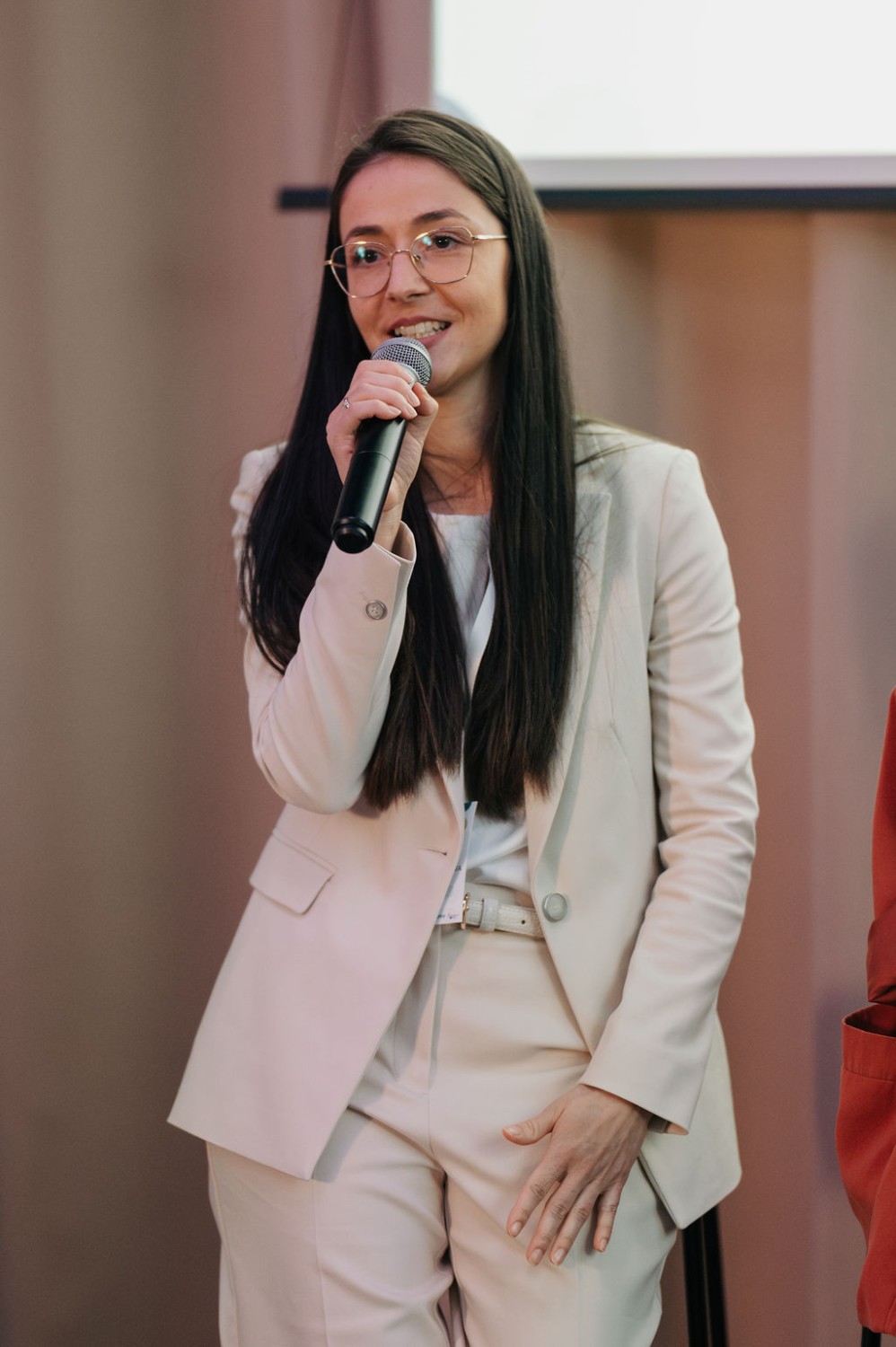
To highlight these challenges and opportunities, Agriventures participated in the HER Fund Talks podcast project. In Episode 23, our founder Mariya Hristova joined host Milena Stoycheva to discuss:
Why women-led startups in deep tech and agrifood receive only a fraction of VC funding
The “double disadvantage” of less-connected innovation ecosystems
The economic value lost when women are underfunded
How initiatives like HER Fund are reshaping the investment landscape
A success story of a founder who turned a grant into global recognition
🎧 You can listen to the full episode here: HER Fund Talks | Episode 23
Tags
Related Articles
Continue reading our latest insights and updates from the AgriVentures ecosystem.

Biotechnology, Agri-Inputs and Biosecurity: Why the Future of Farming Needs a Wider Conversation in Sofia
Agriculture is undergoing a quiet transformation. Genomic tools, precision biological solutions, and new generations of crop protection and plant nutrition products are changing what is possible in the field and along the whole food chain. At the same time, the same advances raise questions that the sector is only beginning to ask. Who controls the genetic resources and seeds we depend on? How do we manage biosecurity when biological agents and genomic technologies can be used for more than...

Where Agrifood Biotech and Research Funding Is Actually Going in 2026
Basic research doesn't fund itself, and in agrifood, the gap between a promising lab result and a fundable project often comes down to knowing which of a dozen overlapping EU programmes to approach first. Food safety science, biotech platforms, and multi-country research consortia each follow their own funding logic, and 2026 has brought fresh calls across all three. Two Live Examples Worth Studying Safe-Agri, one of AgriVentures' active projects, is reinforcing the security assessment...

VerAgro launches a free self-assessment to help farms measure - and improve - their sustainability
"How sustainable is your farm?" It's a question most producers can answer instinctively, but rarely with hard numbers. A new Bulgarian startup wants to change that. VerAgro, a Bulgaria-based agtech startup, has launched a free online self-assessment that gives farms and processors a clear, structured picture of where they stand on sustainability — and what to do next. A 20-minute check-up for your farm The tool works like a health check-up for your operation. Farmers and processors answer 57...

A New Door Is Opening for Bulgarian Farmers and Agri-Innovators - And It's Fully Funded
For years, the biggest barrier between Bulgarian agriculture and Europe's most advanced farms hasn't been ambition. It's been access — to the right rooms, the right people, and the budget to get there. AgriVentures' new Missions program was built to remove exactly that barrier, and it does it in a way few programs in the region ever have: by covering the full cost of getting Bulgarian farmers, entrepreneurs, scientists, and companies in front of Europe's leading agri-food innovators. If you...

Inside projects.agriventures.co: Your Gateway to EU AgriFood Innovation
AgriVentures has launched projects.agriventures.co, a dedicated portal that brings the full portfolio of our EU-funded initiatives into one place. Where agriventures.co connects agrifood innovators with funding, the Projects site shows what happens next: the live programmes, Living Lab pilots, and network activity that funding makes possible. Here's what you'll find on the site — and how each part of our community can put it to work. A Live Portfolio of EU Projects The homepage opens with our...

Understanding Biomass Flows in Europe: A €6M Horizon Europe Call Agrifood Founders Shouldn't Miss
A question we've been getting a lot lately, including from our own LinkedIn community, is some version of: "Can my startup actually apply for this, and how?" This time it's about Understanding biomass flows in Europe (HORIZON-CL6-2026-01-CIRCBIO-05), a Horizon Europe call with a total budget of €6,000,000 that opened on 17 April 2026 and closes on 17 September 2026. It's exactly the kind of opportunity worth breaking down properly, because the honest answer is "yes, but not the way most...
Never Miss an Update
Join our community to receive the latest insights, funding opportunities, and industry news from AgriVentures.