European Parliament Backs Historic 90% Emissions Cut by 2040

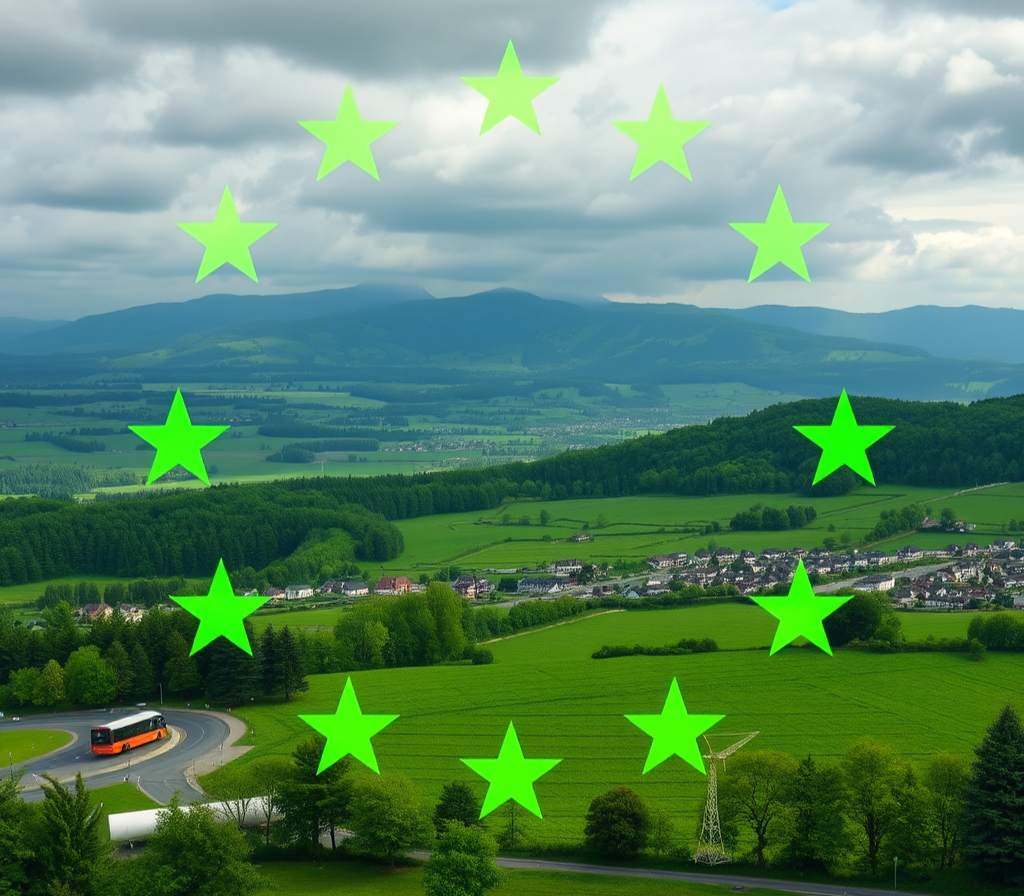
Brussels, 10 February 2026 — The European Parliament has voted to enshrine a 90 percent reduction in net greenhouse gas emissions by 2040 into EU law, setting the most ambitious intermediate climate target ever adopted by a major economy.
The decision strengthens the EU’s legal pathway toward climate neutrality and reinforces decarbonization as a central pillar of Europe’s long-term economic strategy.
The vote updates the EU Climate Law by inserting a binding milestone between the bloc’s 2030 emissions target and its 2050 net-zero objective. By doing so, lawmakers aim to close the policy gap between near-term action and the scale of transformation required later this century, while sending a clear signal to markets and investors about Europe’s direction.
From Green Deal to Binding Law
The path to today’s decision began with the launch of the European Green Deal in 2019, which set the vision of a climate-neutral Europe. That vision became legally binding in 2021 and was reinforced in 2023 through the Fit for 55 package, committing the EU to cut emissions by at least 55 percent by 2030.
As implementation advanced, policymakers faced mounting scientific evidence and investor pressure highlighting the need for a clear mid-term benchmark. In response, the European Commission proposed adding a 2040 target to the Climate Law, triggering months of negotiations across EU institutions and member states.
A Carefully Balanced Compromise
The final agreement preserves the headline ambition while allowing limited flexibility in how reductions are achieved. The framework prioritizes domestic emissions cuts, while permitting a constrained role for high-integrity international carbon credits later in the 2030s. Adjustments to the timing of certain market mechanisms were also included to help protect households and maintain industrial competitiveness.
The result was broad cross-party support in Parliament, reflecting a shared view that climate ambition is not just an environmental goal, but a strategic economic choice.
Why It Matters
The impact of the vote extends well beyond 2040. A binding target reshapes investment decisions today across clean energy, heavy industry, infrastructure, and carbon removal, giving regulators and markets a clearer long-term signal.
With formal publication of the revised Climate Law expected next, member states will move to translate the new target into national climate plans, budgets, and industrial strategies—shifting the focus from whether Europe will act to how quickly and effectively the transition can be delivered.
At AgriVentures, we see decarbonization not just as a trend, but as a key pathway to climate-positive agriculture - one that benefits both the planet and farm profitability.
👉 Learn more: https://sdgnews.com/
Start your fundraising journey with Agriventures https://agriventures.co/pricings
Tags
Related Articles
Continue reading our latest insights and updates from the AgriVentures ecosystem.

Biotechnology, Agri-Inputs and Biosecurity: Why the Future of Farming Needs a Wider Conversation in Sofia
Agriculture is undergoing a quiet transformation. Genomic tools, precision biological solutions, and new generations of crop protection and plant nutrition products are changing what is possible in the field and along the whole food chain. At the same time, the same advances raise questions that the sector is only beginning to ask. Who controls the genetic resources and seeds we depend on? How do we manage biosecurity when biological agents and genomic technologies can be used for more than...

Where Agrifood Biotech and Research Funding Is Actually Going in 2026
Basic research doesn't fund itself, and in agrifood, the gap between a promising lab result and a fundable project often comes down to knowing which of a dozen overlapping EU programmes to approach first. Food safety science, biotech platforms, and multi-country research consortia each follow their own funding logic, and 2026 has brought fresh calls across all three. Two Live Examples Worth Studying Safe-Agri, one of AgriVentures' active projects, is reinforcing the security assessment...

VerAgro launches a free self-assessment to help farms measure - and improve - their sustainability
"How sustainable is your farm?" It's a question most producers can answer instinctively, but rarely with hard numbers. A new Bulgarian startup wants to change that. VerAgro, a Bulgaria-based agtech startup, has launched a free online self-assessment that gives farms and processors a clear, structured picture of where they stand on sustainability — and what to do next. A 20-minute check-up for your farm The tool works like a health check-up for your operation. Farmers and processors answer 57...

A New Door Is Opening for Bulgarian Farmers and Agri-Innovators - And It's Fully Funded
For years, the biggest barrier between Bulgarian agriculture and Europe's most advanced farms hasn't been ambition. It's been access — to the right rooms, the right people, and the budget to get there. AgriVentures' new Missions program was built to remove exactly that barrier, and it does it in a way few programs in the region ever have: by covering the full cost of getting Bulgarian farmers, entrepreneurs, scientists, and companies in front of Europe's leading agri-food innovators. If you...

Inside projects.agriventures.co: Your Gateway to EU AgriFood Innovation
AgriVentures has launched projects.agriventures.co, a dedicated portal that brings the full portfolio of our EU-funded initiatives into one place. Where agriventures.co connects agrifood innovators with funding, the Projects site shows what happens next: the live programmes, Living Lab pilots, and network activity that funding makes possible. Here's what you'll find on the site — and how each part of our community can put it to work. A Live Portfolio of EU Projects The homepage opens with our...

Understanding Biomass Flows in Europe: A €6M Horizon Europe Call Agrifood Founders Shouldn't Miss
A question we've been getting a lot lately, including from our own LinkedIn community, is some version of: "Can my startup actually apply for this, and how?" This time it's about Understanding biomass flows in Europe (HORIZON-CL6-2026-01-CIRCBIO-05), a Horizon Europe call with a total budget of €6,000,000 that opened on 17 April 2026 and closes on 17 September 2026. It's exactly the kind of opportunity worth breaking down properly, because the honest answer is "yes, but not the way most...
Never Miss an Update
Join our community to receive the latest insights, funding opportunities, and industry news from AgriVentures.