Agrifood Startups and Innovation Ecosystems: Why They Matter for the Future of Agriculture

The global agrifood sector is entering a period of rapid transformation. Climate change, food security challenges, technological disruption, and changing consumer expectations are forcing agriculture to evolve faster than ever before.
At the center of this transformation are agrifood startups and agricultural innovation ecosystems. These emerging companies are becoming essential drivers of sustainable agriculture, food system resilience, and economic development.
For platforms such as Agriventures, which focus on supporting agrifood startups, agricultural innovation, and access to funding for agriculture, understanding how entrepreneurial ecosystems function is essential for building the next generation of sustainable food systems.
The Growing Role of Agrifood Startups in Innovation
Startups play a disproportionate role in driving innovation, employment, and productivity growth across economies. Despite their relatively small size, new ventures often introduce disruptive technologies and business models that transform entire industries.
This trend is increasingly visible in the agriculture and food sectors. Agrifood startups are developing technologies that help farmers improve productivity, reduce environmental impact, and adapt to climate change.
These companies are introducing precision agriculture technologies that enable data-driven farm management, biological fertilizers that improve soil health and reduce dependency on chemical inputs, and food biotechnology solutions that create alternative proteins and sustainable ingredients.
Artificial intelligence, satellite data, robotics, and biotechnology are transforming agriculture into a high-tech sector. As a result, agrifood innovation is becoming one of the most important drivers of the global transition toward sustainable agriculture and climate-resilient food systems.
The Challenge of Fragmented Agricultural Innovation Ecosystems
Despite the growing importance of agrifood startups, innovation in agriculture often faces structural challenges. One of the most significant barriers is the fragmentation of startup ecosystems and the limited access to information about funding opportunities, investors, and innovation networks.
Startups are typically small, privately owned companies with short life cycles. These characteristics make it difficult to systematically collect data about them and to track their development across countries and sectors.
In addition, entrepreneurial ecosystems are complex networks of multiple actors that interact with startups. These include founders, venture capital funds, angel investors, universities, research institutions, accelerators, incubators, and government funding programs.
Without strong connections between these actors, startups often struggle to find the financial support, mentorship, and partnerships required to scale their technologies. This challenge is particularly relevant in agriculture, where innovation cycles are longer and require close collaboration between science, industry, and farmers.
Global Trends in Startup Ecosystems
Recent research analyzing global entrepreneurial ecosystems tracks nearly 4.5 million startups founded between 2000 and 2025, providing an unprecedented view of global innovation activity.
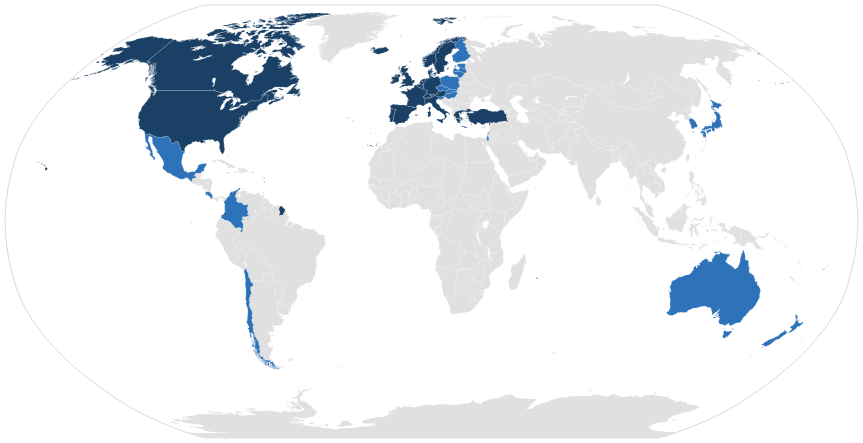
The analysis integrates multiple sources of information including startup databases, venture capital investments, patent activity, and firm-level financial data. This comprehensive dataset allows researchers and policymakers to better understand how startup ecosystems evolve across regions and industries.
Several important trends emerge from the data. Startup ecosystems are expanding rapidly outside North America and Europe, with Asia and emerging markets showing significant growth in entrepreneurial activity. Venture capital remains the dominant source of startup funding globally, but alternative financing instruments such as grants, public funding, and accelerator programs are increasingly important in Europe.
The data also highlight the growing role of collaboration between startups, universities, corporates, and public institutions. Innovation ecosystems that combine these actors tend to produce more successful startups and attract greater levels of investment.
Why Agrifood Innovation Requires Strong Ecosystems
Agriculture innovation differs from many other startup sectors. Developing technologies for farming, food production, and biotechnology often requires longer research and development cycles, field testing, regulatory approvals, and collaboration with farmers and research institutions.
Because of these characteristics, agrifood startups depend heavily on well-developed innovation ecosystems that provide access to capital, expertise, and research infrastructure.
Successful agricultural innovation ecosystems typically include strong university research programs that generate scientific discoveries, venture capital and public funding mechanisms that support early-stage startups, specialized accelerators and incubators focused on agrifood innovation, and networks of farmers who test and validate new technologies.
Regions that manage to build such ecosystems tend to attract more agritech investment, produce globally competitive startups, and accelerate the transition toward sustainable food production systems.
Agriventures and the Development of the Agrifood Startup Ecosystem
Agriventures is part of a growing movement aimed at strengthening the agrifood innovation ecosystem in Europe. The organization focuses on supporting startups, innovators, and researchers working in agriculture, biotechnology, and food technology.
Through its platform and community initiatives, Agriventures helps improve access to European funding for agriculture, connects agrifood startups with investors and mentors, and supports the commercialization of scientific research in the food and biotechnology sectors.
One of the key challenges in agricultural innovation is the fragmentation of information about funding programs, investors, and research collaborations. Agriventures addresses this gap by creating a platform where entrepreneurs, farmers, scientists, and investors can access reliable information about startup funding, venture capital opportunities, and innovation programs in the agrifood sector.
By strengthening connections between research institutions, startups, and investors, Agriventures contributes to building a more dynamic and competitive agricultural innovation ecosystem in Europe.
The Future of Agrifood Entrepreneurship
The next decade will likely bring a new wave of deep tech innovation in agriculture and food systems. Technologies such as artificial intelligence for farm management, biological crop protection, carbon farming solutions, and digital supply chain platforms are expected to reshape how food is produced and distributed globally.
To unlock the full potential of these technologies, stronger startup ecosystems will be required. Collaboration between universities, investors, startups, and farmers will become even more important for scaling innovation and accelerating the transition toward climate-smart agriculture.
Agrifood startups will play a central role in this transformation. With the right support structures, access to funding, and strong innovation networks, they can become powerful drivers of sustainable agriculture and global food security.
Platforms such as Agriventures are helping build the infrastructure needed for this new generation of agrifood innovators. By connecting startups, investors, and researchers, Agriventures is contributing to the development of a thriving agricultural innovation ecosystem that can support the future of food and farming.
Contact us: start@agriventures.co
Join the Agriventures Connect Event on 19 March
To continue building the agrifood innovation ecosystem, Agriventures is organizing the Agriventures Connect event on 19 March, bringing together entrepreneurs, investors, researchers, and professionals working in agriculture, food technology, and biotechnology.
The event will focus on innovation, startup funding opportunities, and collaboration in the agrifood sector.
Participants can attend in person or follow the discussion through a LinkedIn livestream. Registration for the event is available at https://luma.com/r5xnl0qz, and the full event information can be found at https://connect.agriventures.co/. This event is designed to strengthen connections within the agrifood startup ecosystem and support the development of innovative solutions for sustainable agriculture.
Sources: Berger, M. et al. (2026), “The OECD Start-ups Database: A new lens on the global entrepreneurial ecosystems”, OECD Science, Technology and Industry Working Papers, No. 2026/04, OECD Publishing, Paris, https://doi.org/10.1787/be8e5317-en.
Tags
Related Articles
Continue reading our latest insights and updates from the AgriVentures ecosystem.

Biotechnology, Agri-Inputs and Biosecurity: Why the Future of Farming Needs a Wider Conversation in Sofia
Agriculture is undergoing a quiet transformation. Genomic tools, precision biological solutions, and new generations of crop protection and plant nutrition products are changing what is possible in the field and along the whole food chain. At the same time, the same advances raise questions that the sector is only beginning to ask. Who controls the genetic resources and seeds we depend on? How do we manage biosecurity when biological agents and genomic technologies can be used for more than...

Where Agrifood Biotech and Research Funding Is Actually Going in 2026
Basic research doesn't fund itself, and in agrifood, the gap between a promising lab result and a fundable project often comes down to knowing which of a dozen overlapping EU programmes to approach first. Food safety science, biotech platforms, and multi-country research consortia each follow their own funding logic, and 2026 has brought fresh calls across all three. Two Live Examples Worth Studying Safe-Agri, one of AgriVentures' active projects, is reinforcing the security assessment...

VerAgro launches a free self-assessment to help farms measure - and improve - their sustainability
"How sustainable is your farm?" It's a question most producers can answer instinctively, but rarely with hard numbers. A new Bulgarian startup wants to change that. VerAgro, a Bulgaria-based agtech startup, has launched a free online self-assessment that gives farms and processors a clear, structured picture of where they stand on sustainability — and what to do next. A 20-minute check-up for your farm The tool works like a health check-up for your operation. Farmers and processors answer 57...

A New Door Is Opening for Bulgarian Farmers and Agri-Innovators - And It's Fully Funded
For years, the biggest barrier between Bulgarian agriculture and Europe's most advanced farms hasn't been ambition. It's been access — to the right rooms, the right people, and the budget to get there. AgriVentures' new Missions program was built to remove exactly that barrier, and it does it in a way few programs in the region ever have: by covering the full cost of getting Bulgarian farmers, entrepreneurs, scientists, and companies in front of Europe's leading agri-food innovators. If you...

Inside projects.agriventures.co: Your Gateway to EU AgriFood Innovation
AgriVentures has launched projects.agriventures.co, a dedicated portal that brings the full portfolio of our EU-funded initiatives into one place. Where agriventures.co connects agrifood innovators with funding, the Projects site shows what happens next: the live programmes, Living Lab pilots, and network activity that funding makes possible. Here's what you'll find on the site — and how each part of our community can put it to work. A Live Portfolio of EU Projects The homepage opens with our...

Understanding Biomass Flows in Europe: A €6M Horizon Europe Call Agrifood Founders Shouldn't Miss
A question we've been getting a lot lately, including from our own LinkedIn community, is some version of: "Can my startup actually apply for this, and how?" This time it's about Understanding biomass flows in Europe (HORIZON-CL6-2026-01-CIRCBIO-05), a Horizon Europe call with a total budget of €6,000,000 that opened on 17 April 2026 and closes on 17 September 2026. It's exactly the kind of opportunity worth breaking down properly, because the honest answer is "yes, but not the way most...
Never Miss an Update
Join our community to receive the latest insights, funding opportunities, and industry news from AgriVentures.